Built for basketball.

Four 10-minute quarters can take 75 to 90 minutes of court time once stoppages are included. FairGame schedules 80 minutes per game by default. Referees can record baskets and fouls from their phones.

Free for up to 16 teams — no card required.

FairGame’s public standings for a basketball group with no draw column: played, won, lost, points for, points against and points difference

Basketball tournaments that book the court for the whole game

The court, booked for the whole game

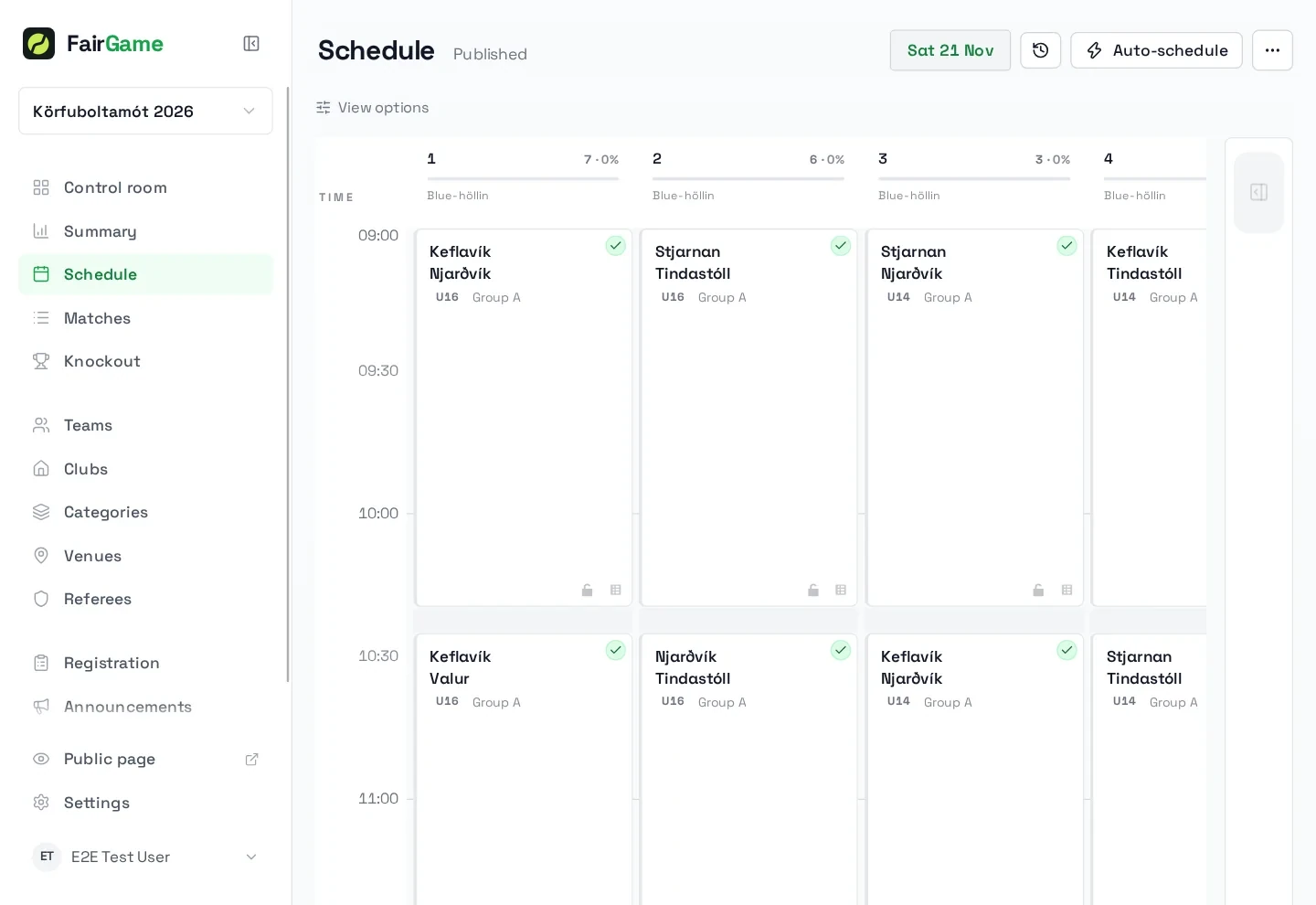
A game with four 10-minute quarters and a stop clock takes about 75 to 90 minutes of court time. FairGame allows 80 minutes by default. Adjust that time for categories that play shorter or longer games.

  • 80 minutes per game by default, adjustable by category
  • Rest between a team’s games is checked as you move them
FairGame schedule for a basketball tournament: four courts in one hall, with a round of games every 85 minutes from 09:00

Two officials per game

FairGame allows for two officials per basketball game. The match list names the assigned officials and highlights games without an assignment in amber.

  • Two officials per game in the schedule
  • The referee’s page has +1, +2 and +3 buttons for each team
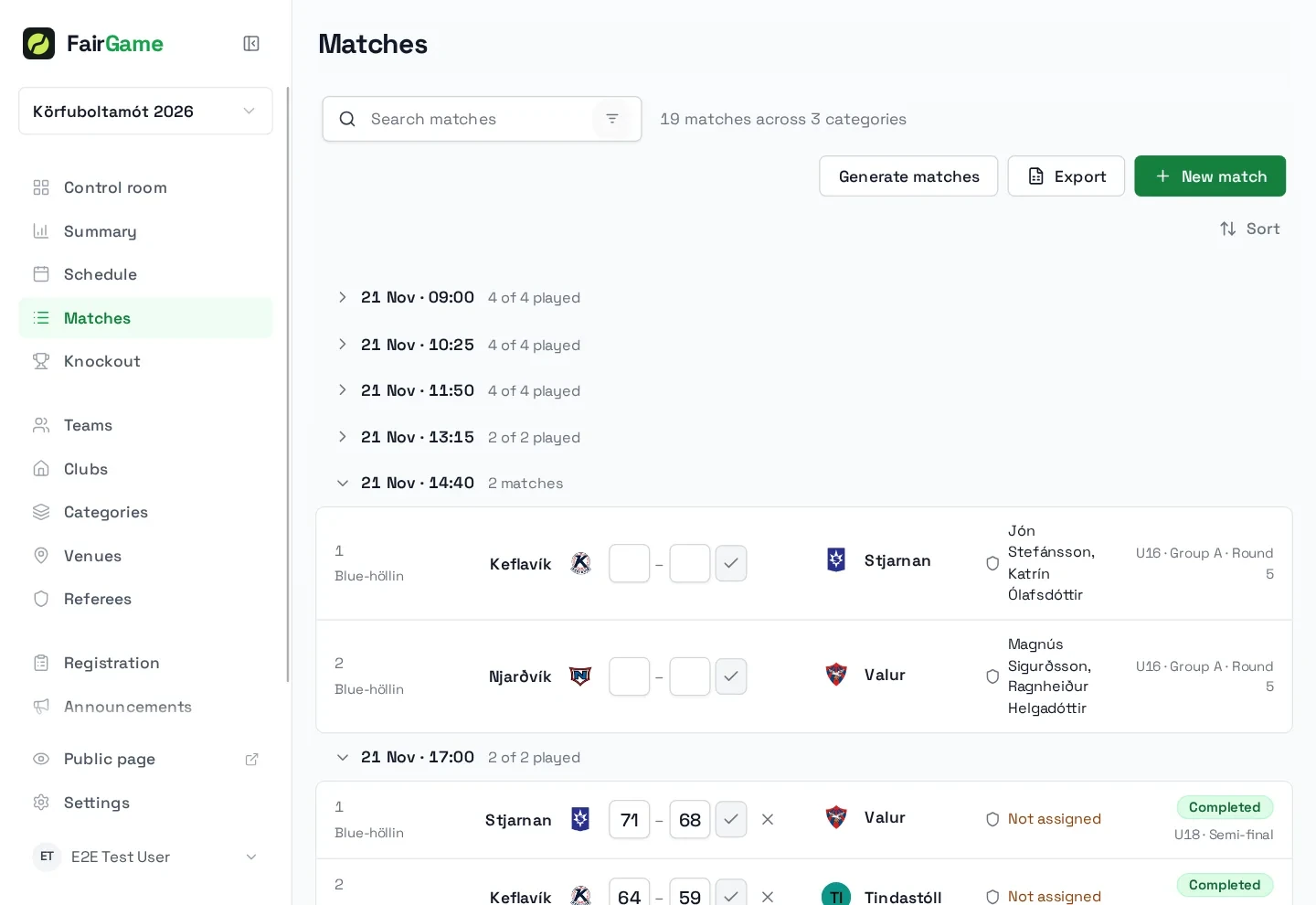
FairGame match list for a basketball tournament: two officials named beside each group game, and semi-finals that finished 71–68 and 64–59

Fouls instead of cards

Switch on penalty tracking and every game offers basketball’s own list: personal, technical, unsportsmanlike and disqualifying fouls, each recorded against the player with the minute. FairGame lists them on the game; it does not count team fouls toward the bonus.

  • Recorded on the match page or from the referee’s phone
  • Listed on the public match page under each team
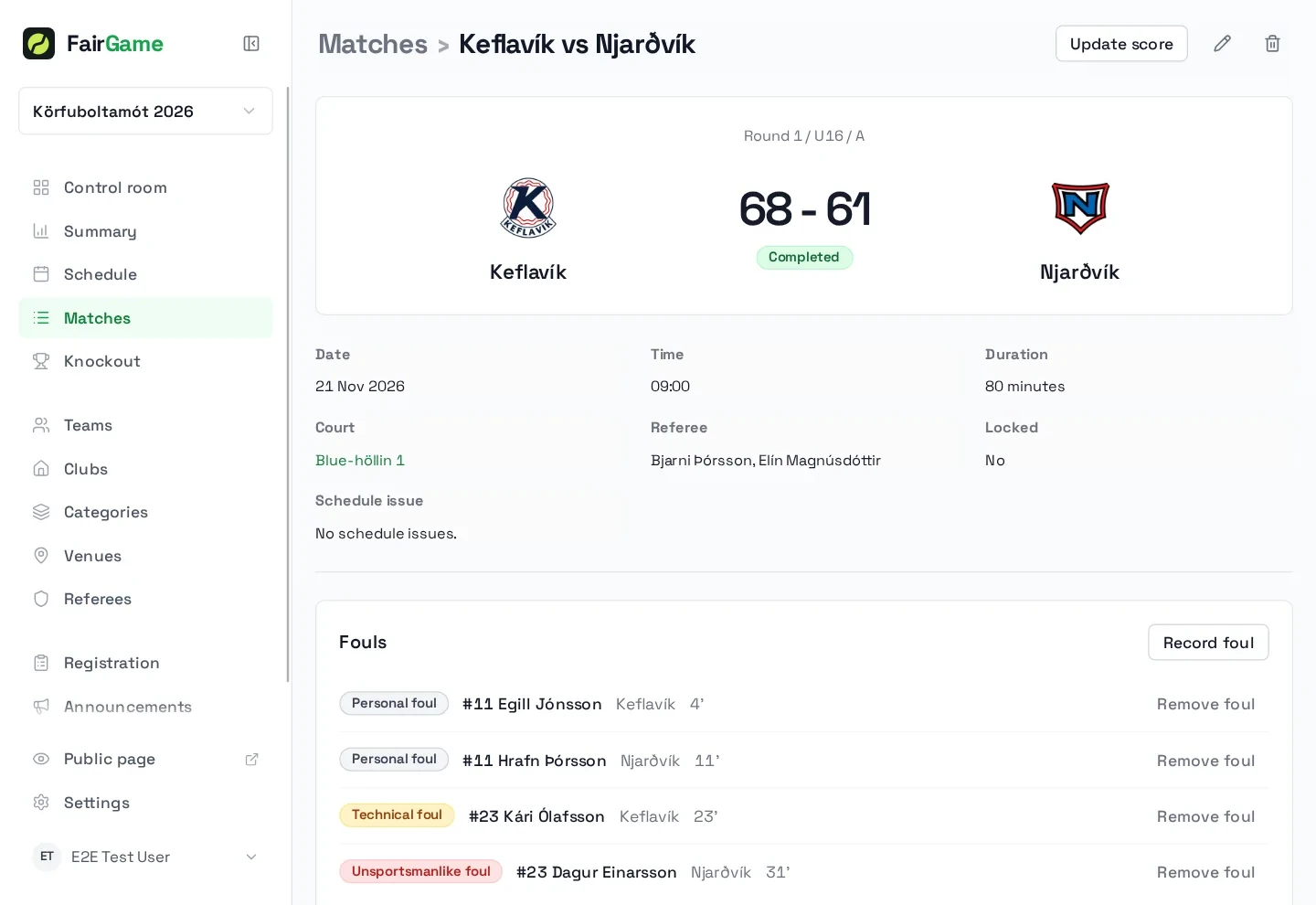
FairGame match page for a basketball game, with personal, technical and unsportsmanlike fouls recorded against players

Overtime decides a tied knockout game

If the score is tied, FairGame prompts you to enter the result after overtime. The winner then advances to the next round.

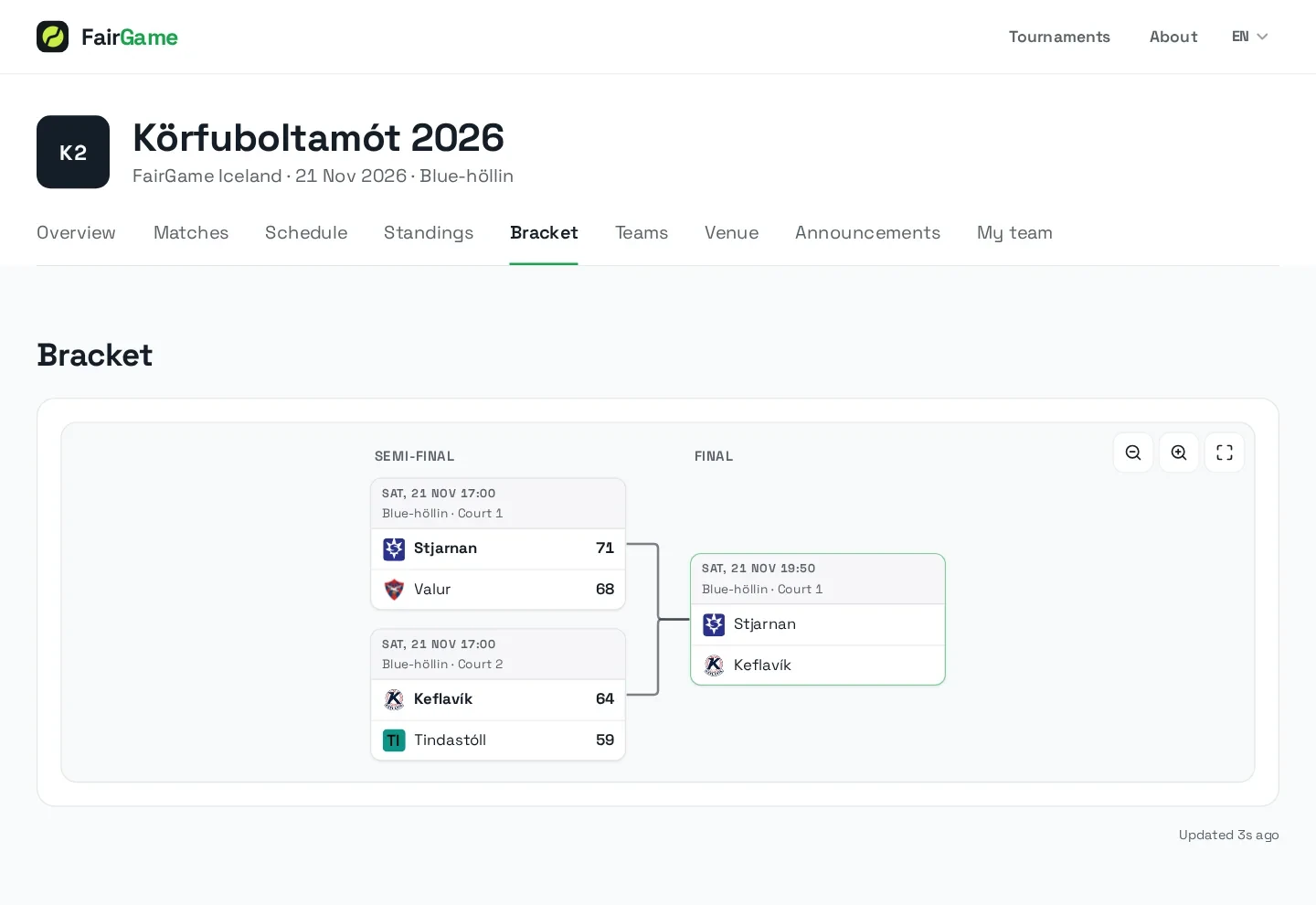
FairGame public bracket for a basketball tournament: both semi-finals are played, 71–68 and 64–59, and the winners are in the final

Tables without a draw column

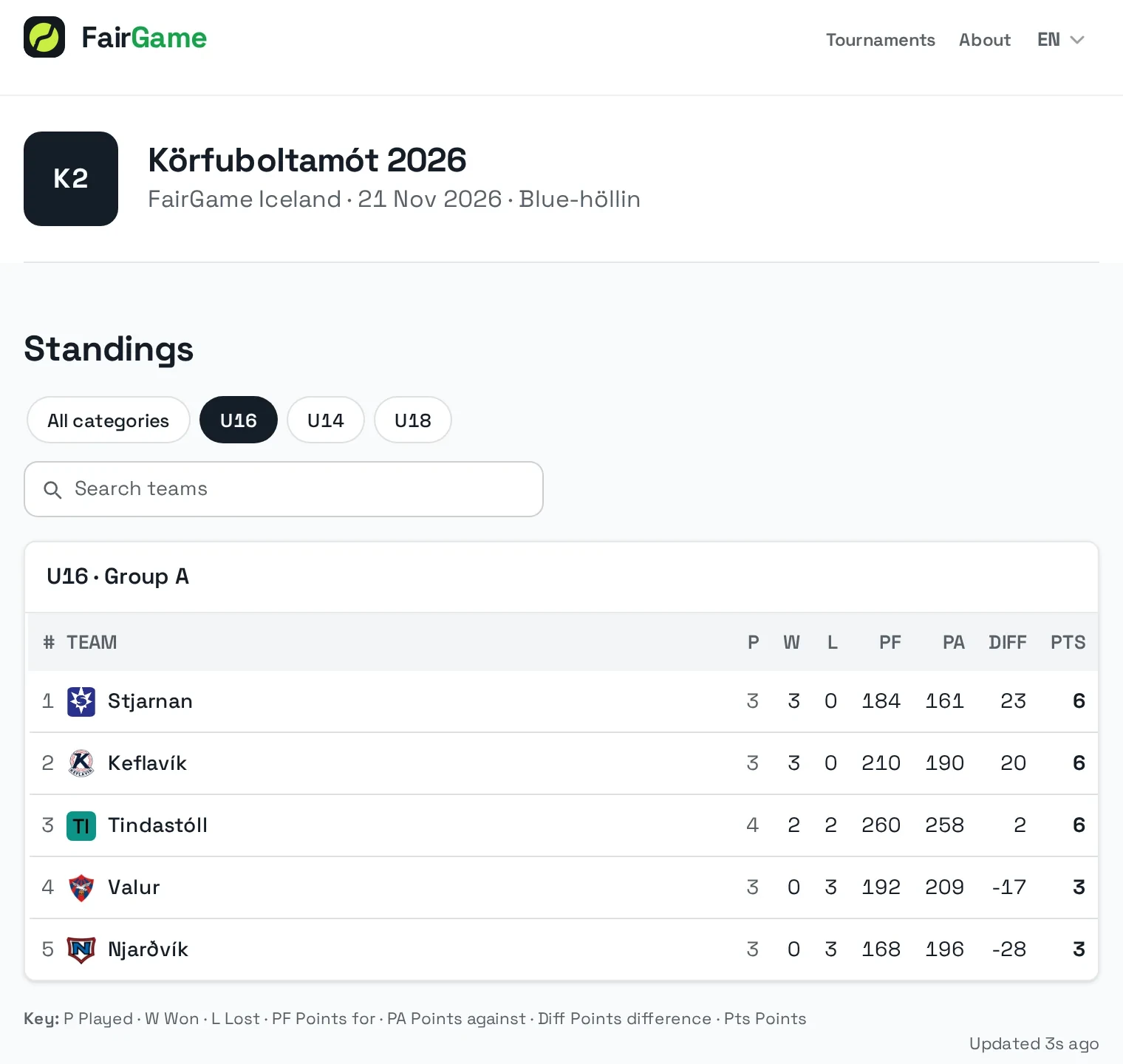
Every game has a public page with the score, the fouls, the group table and the rest of the group’s games. The table gives two points for a win and one for a loss, and separates level teams on wins and then points difference.

  • Updates as referees save results, with no account needed to open it
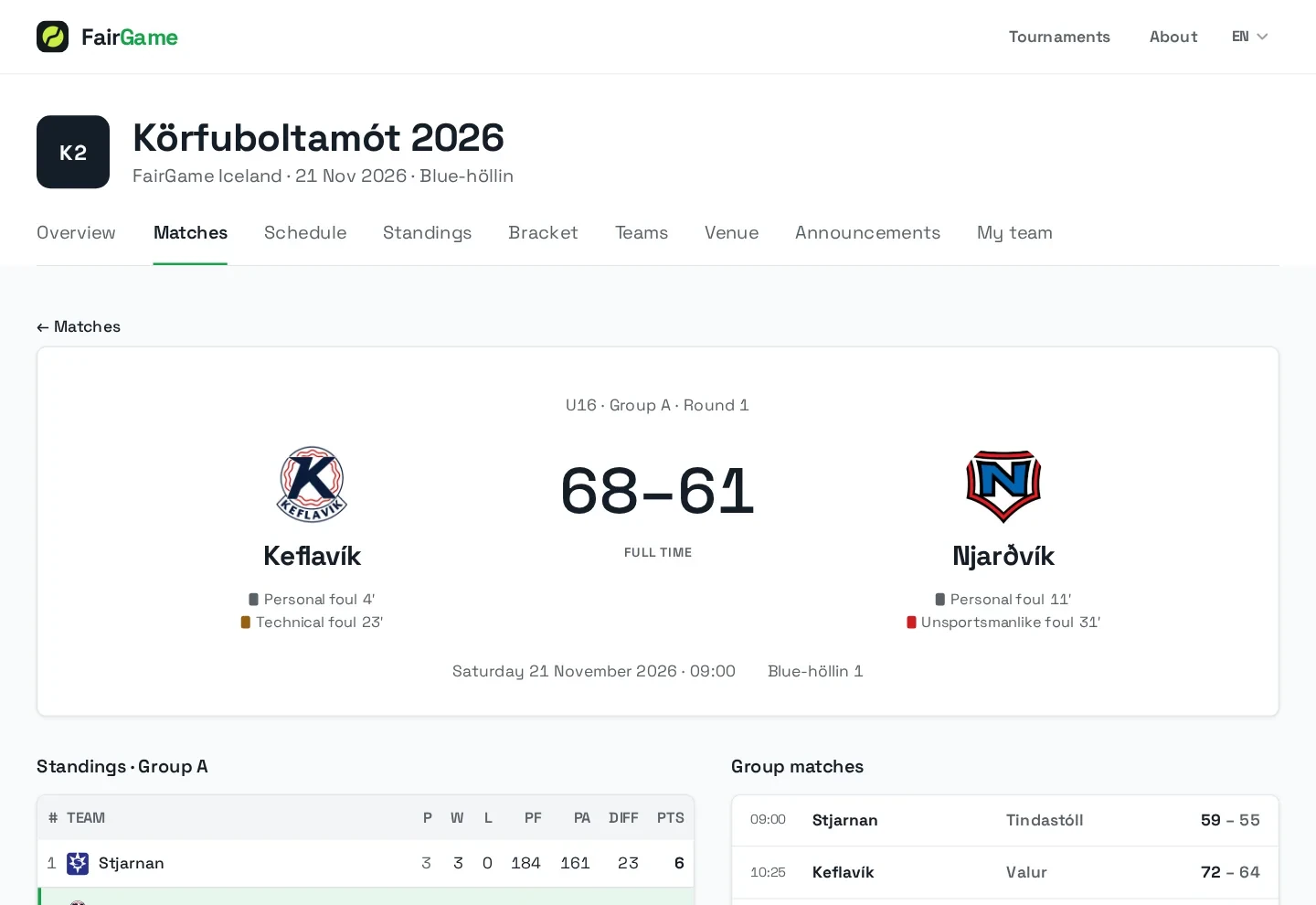
FairGame public page for a basketball game: the score, the fouls under each team, and group standings with points for, points against and points difference

Groups, Swiss pool, knockout or ladder

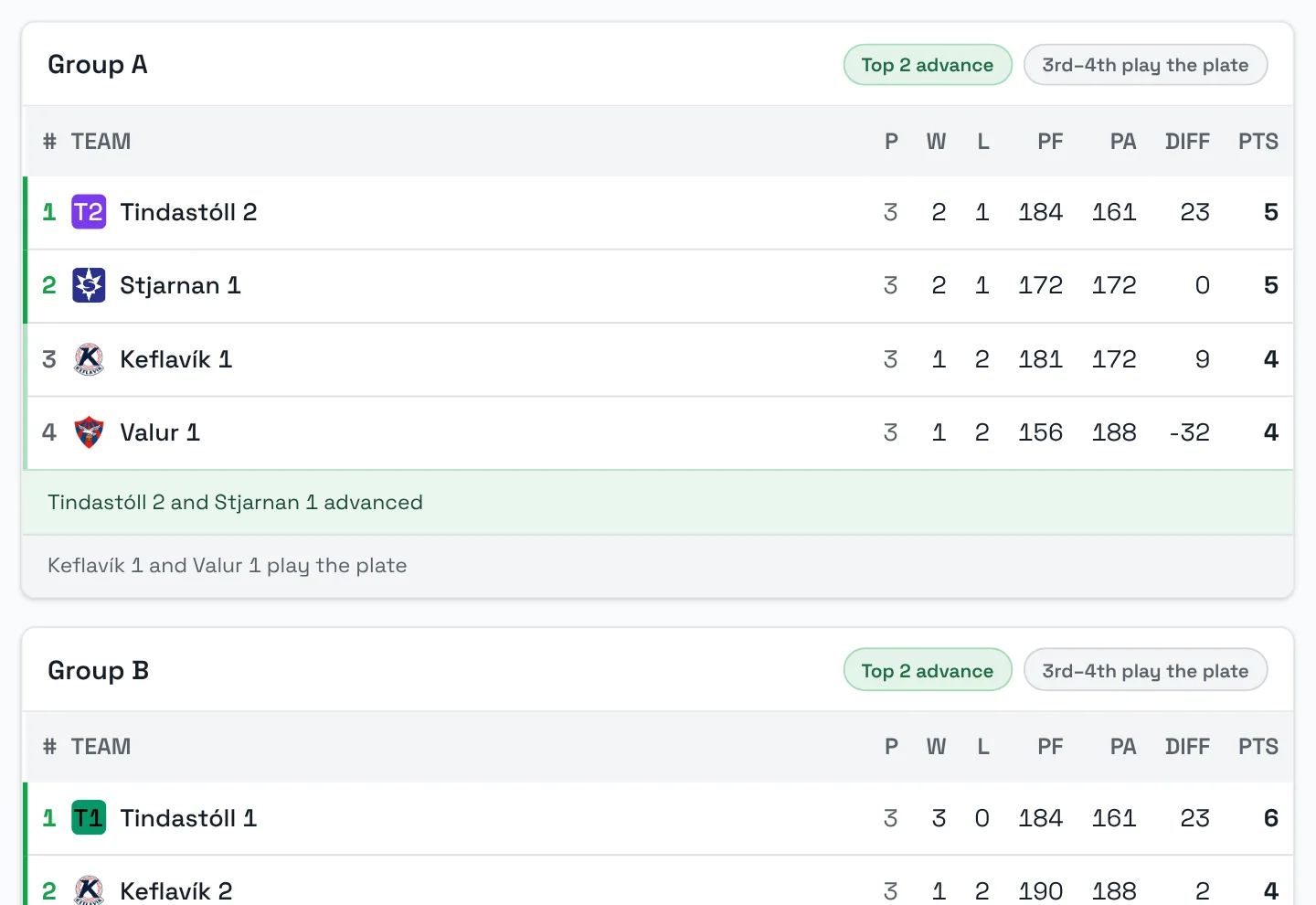
The tournament system decides how many matches everyone gets and how the winner is found. FairGame builds the fixtures for whichever you choose, and these are the public pages each one is followed on.

FairGame’s public standings for two groups of four: the top two of each group are marked as advancing and the other two go to the plate

Round-robin groups

Best for Small fields, and the stage before a bracket

Everyone in a group plays everyone else once, and the table decides the order. It is the fairest way to rank a small field. The number of matches grows quickly with the size of the group, which is why groups usually stay at four or five.
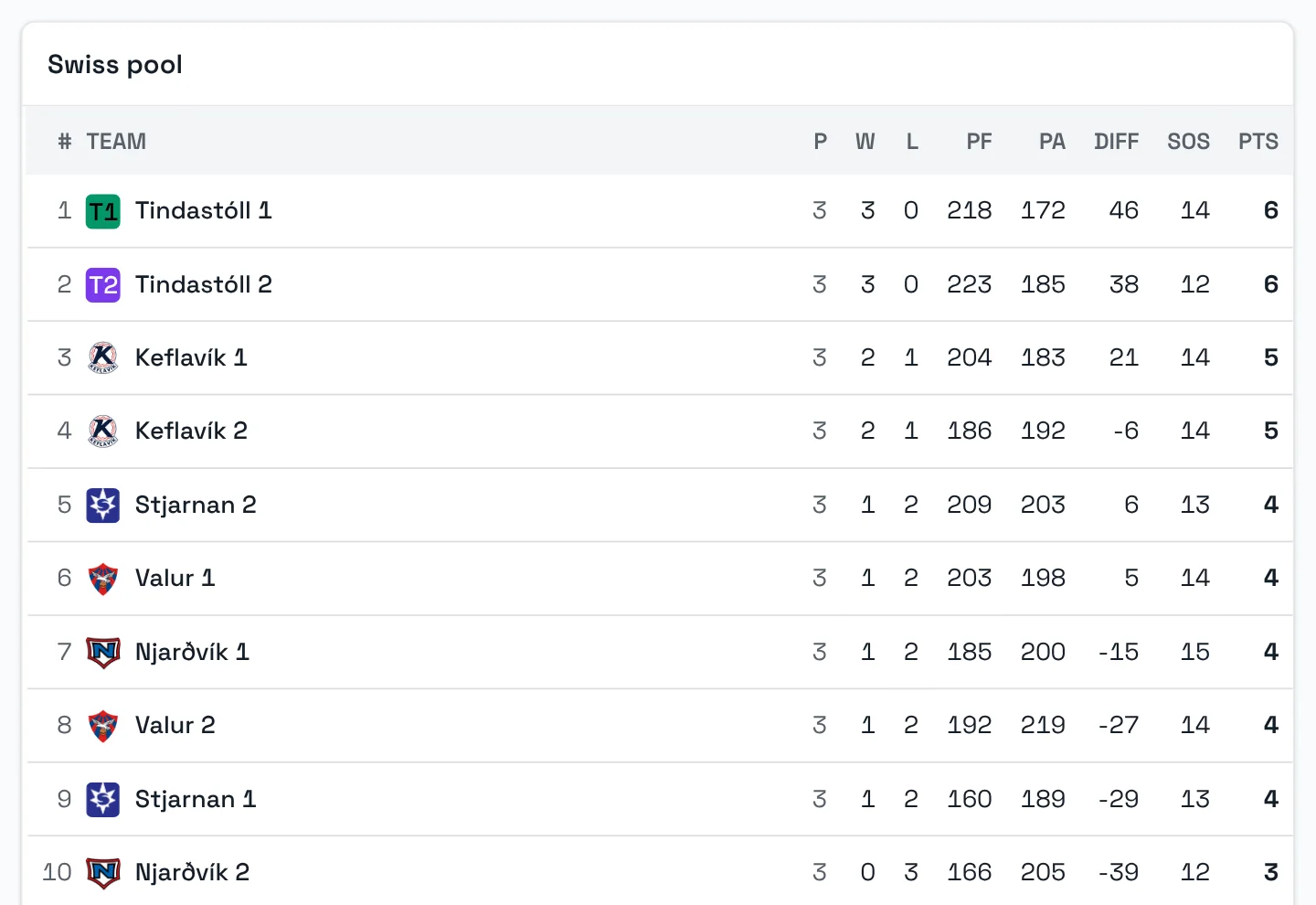
FairGame’s public standings for a Swiss pool of ten after three rounds, with a column for opponents’ points beside the points column

Swiss pool

Best for Large fields that want even matches

The whole field stays in one pool and plays a set number of rounds, each against an opponent of similar strength. Nobody is knocked out, and a field of twelve plays 30 matches where a full round robin would take 66. Level on points, the table looks at how strong each side’s opponents were.

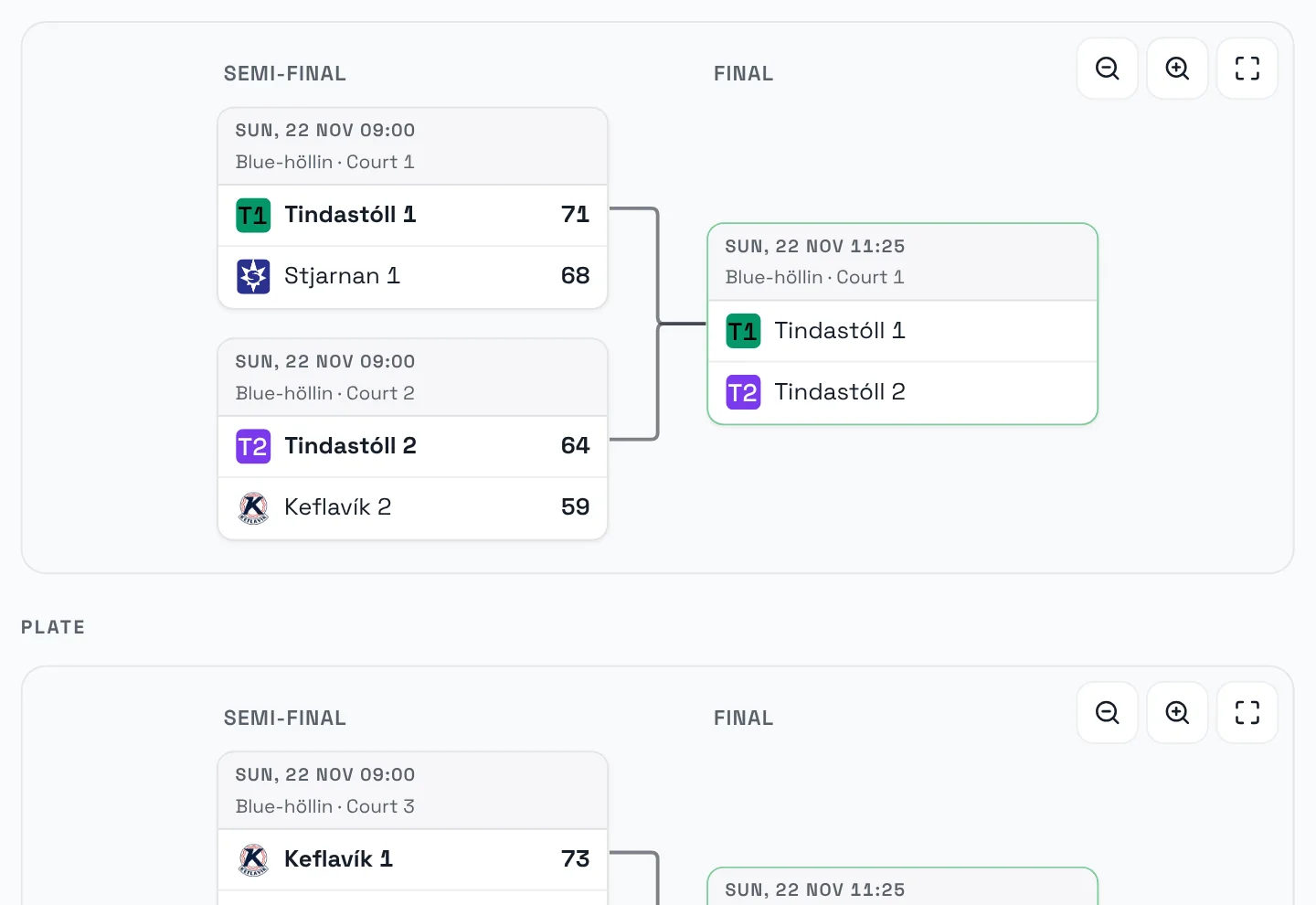
FairGame’s public bracket: two semi-finals with their results, the final with its start time, and the plate bracket below

Knockout

Best for One champion on a fixed timetable

The winner goes through, and the bracket fills in as results arrive. Seed it straight from the entry list or from the group tables, and add a plate bracket so that those who miss the cut keep playing.

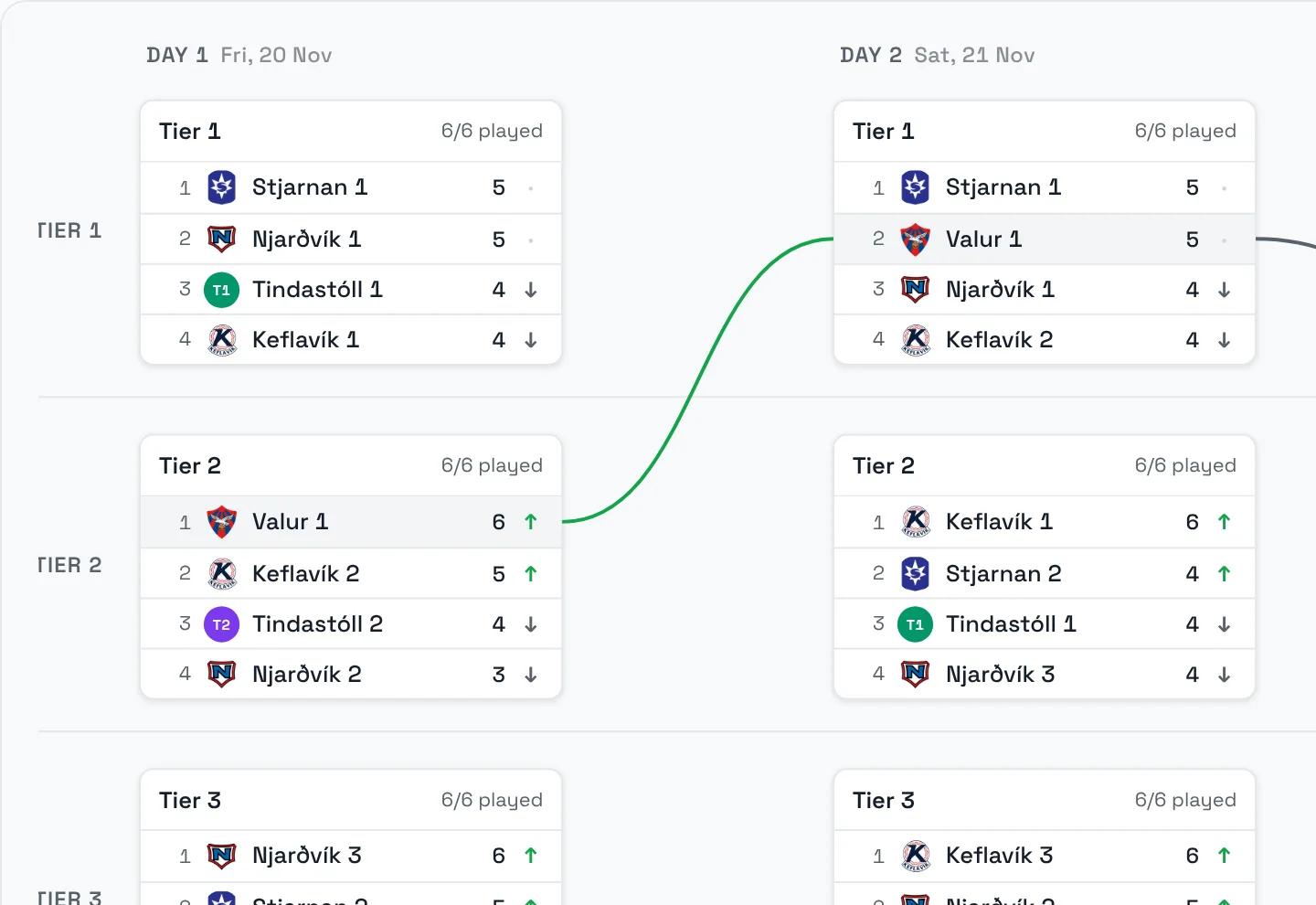
FairGame’s public ladder page: the tier tables of two days, arrows for promotion and relegation, and one entrant’s move from tier 2 up to tier 1 traced between them

Re-seeding ladder

Best for Large fields over several days

Each day is played in groups of four, stacked in tiers. The top of every group moves up a tier for the next day and the bottom moves down, so within a day or two everyone is playing opponents of their own level.

Build the bracket from the group tables

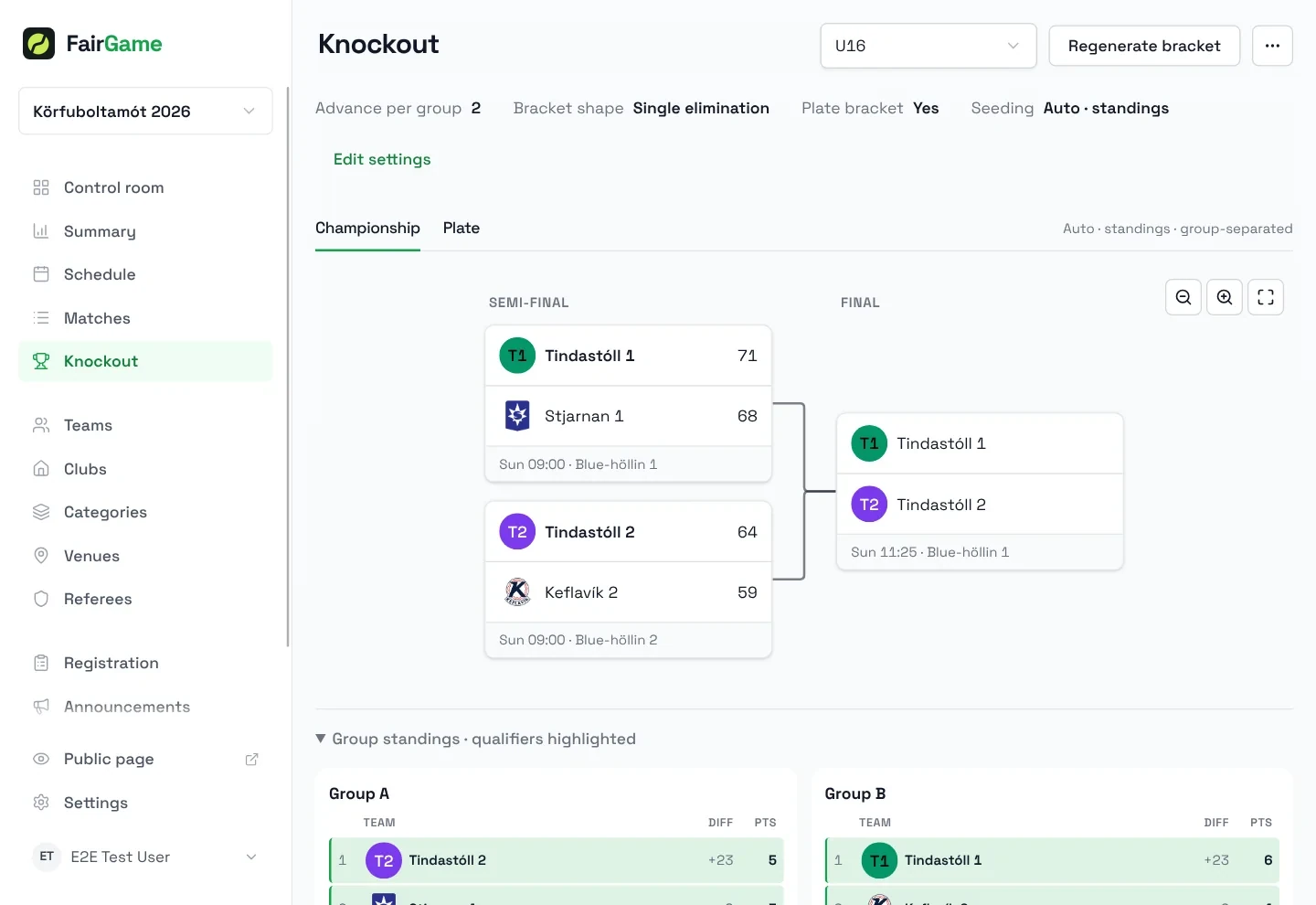
Once the groups are played out, the bracket is drawn from their tables. You choose how many advance from each group, whether the best third-placed fill the spare places, and whether seeding follows the standings or each side’s rating. Group rivals are kept apart in the first round.

  • Six bracket shapes, from single elimination to a play-off for every place
  • A plate bracket for those who miss the cut, and an optional third-place play-off
FairGame’s Knockout page: the bracket’s settings on one line, the championship bracket with its semi-final results, and the group tables with the qualifiers highlighted

Built for your sport.

Next weekend.
One screen.

Level the playing field — and run your next weekend from one screen.