Referee Management for Multi-Pitch Tournaments

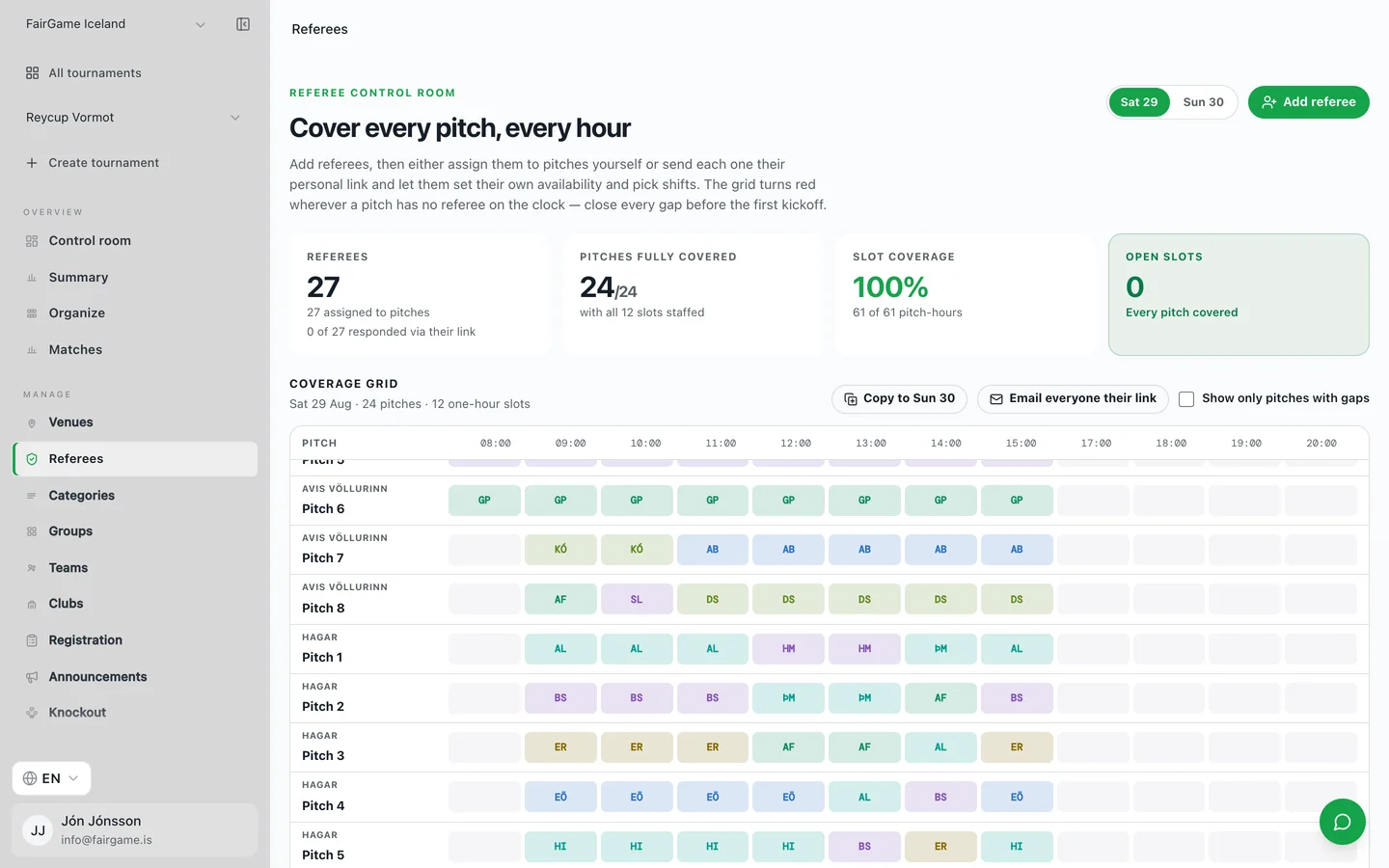
On a busy tournament day a missing referee stops a match as surely as a missing team. With games kicking off every few minutes across a dozen pitches, keeping an official on every one is its own logistics problem.
Here is how to staff referees without gaps, avoid the conflicts that erode trust, and get scores off the pitch and onto the results page in seconds.
Referees are a scheduling constraint, not an afterthought
A referee can only be in one place at a time, needs a break between matches, and should never officiate a game their own club is playing in. Those are the same kind of rules the fixture scheduler already juggles for teams and pitches — which is why referee coverage belongs in the schedule from the start, not bolted on the morning of.
See every gap before the first whistle
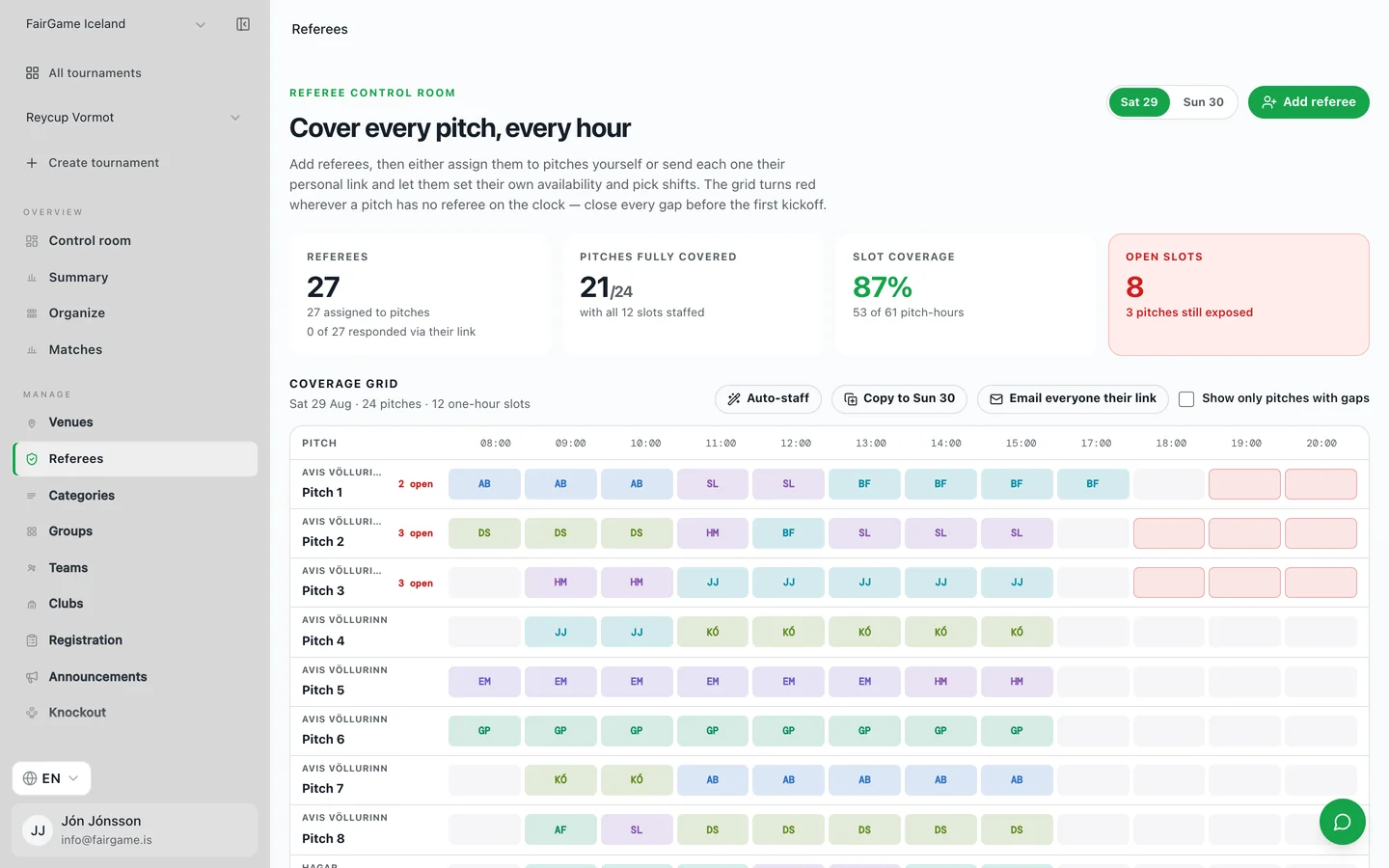
Map every pitch against every hour and the holes jump out. FairGame's referee grid turns red wherever a pitch has no official on the clock, so you can spot an uncovered slot at 11:00 on pitch 3 while there is still time to fill it — not when two teams are standing on the touchline waiting.
Never let a team referee its own match
Nothing erodes trust in a tournament faster than a club appearing to officiate a game it has a stake in. Treat “no team referees its own match” as a hard rule and enforce it automatically, alongside rest gaps and pitch coverage, so it can never slip through on a hectic morning.
Put a match card in every referee's hand
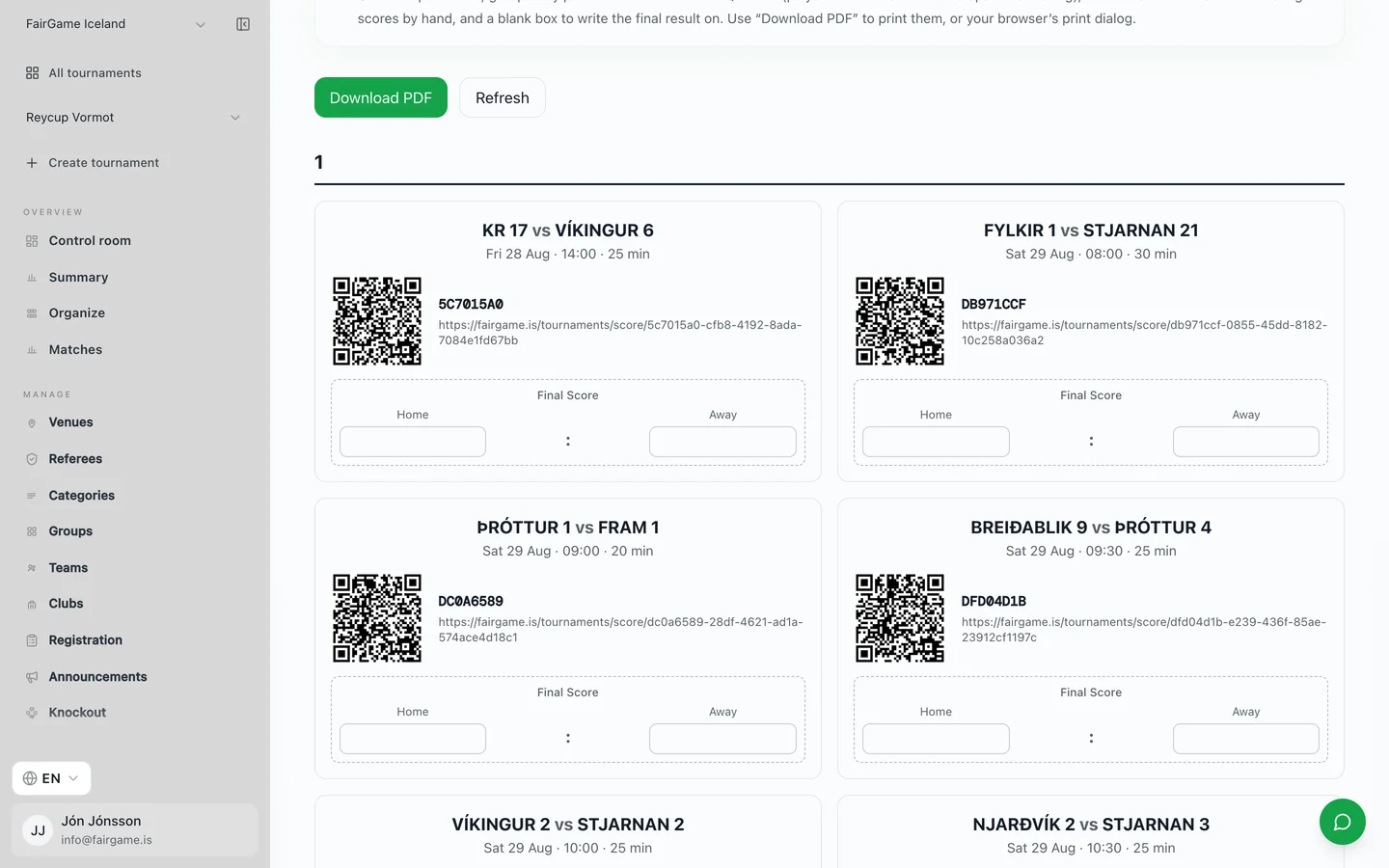
Give each official a card for their match: the teams, the kickoff time, the pitch, and a QR code that opens the score-entry page for exactly that game. No hunting for the right fixture and no radioing results back to a laptop — the referee scans, taps in the score, and it is done.
Let scores flow straight to the results page
The faster a final score leaves the pitch, the faster standings update and the fewer times anyone asks who is winning. When referees enter results on their phone at the final whistle, the public standings and knockout brackets recalculate on their own — no double entry, no lag.
Let FairGame staff the gaps
Add your referees and their availability, and FairGame auto-staffs the grid — assigning an official to every pitch-hour, respecting breaks, and keeping teams away from their own matches. A wall of red becomes full coverage in one pass, so you spend the day on the pitches instead of chasing officials.