How to Schedule a Round-Robin Tournament

A round-robin is the fairest way to run a group stage: every team plays every other team once, so the final standings reflect real form rather than a lucky draw. It is also the format most likely to break a spreadsheet.
This guide walks through how round-robin scheduling actually works, how to handle an odd number of teams, and how to avoid the conflicts that force organizers to rebuild the schedule the night before kickoff.
How many matches will you actually play?
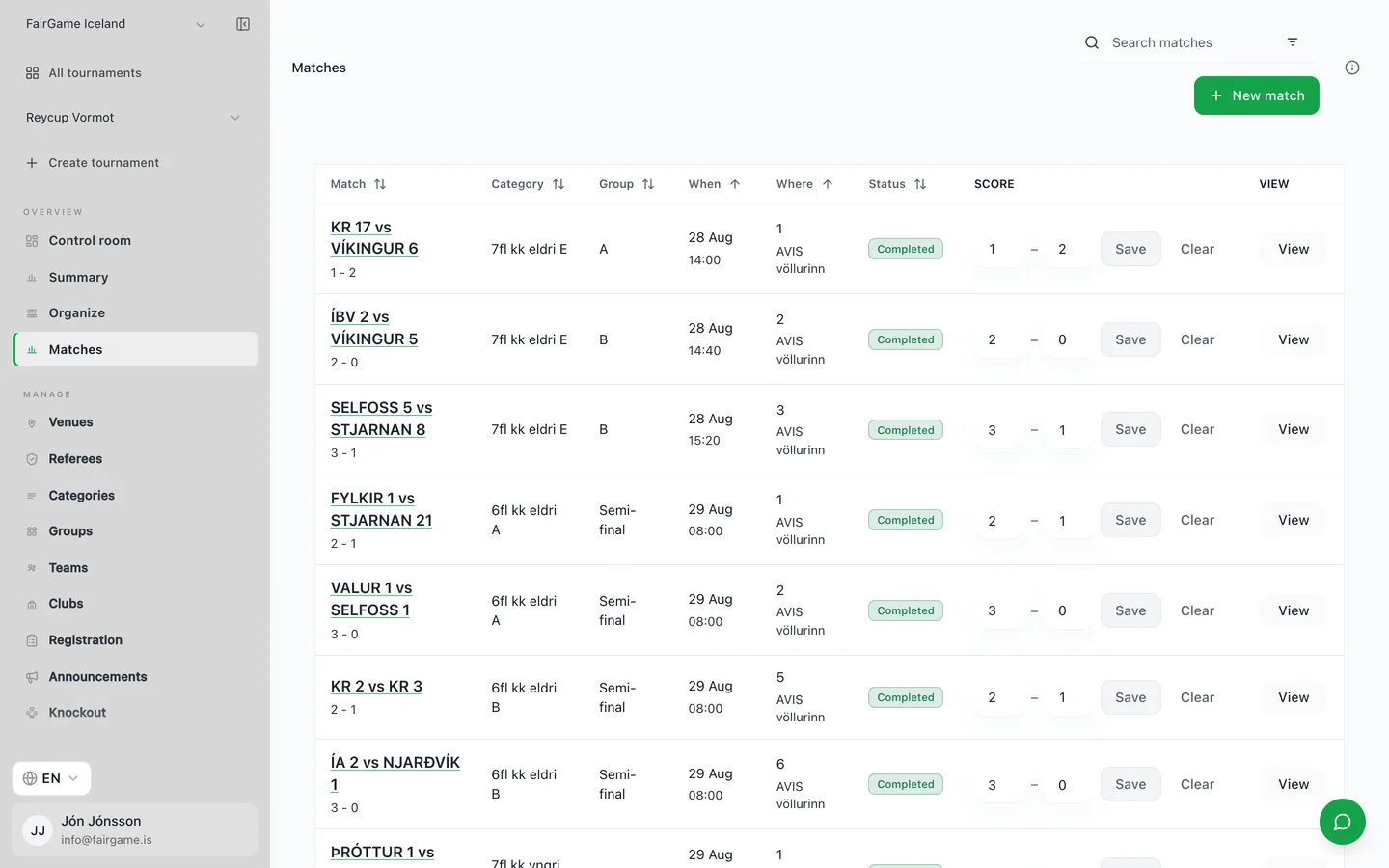
For a single round-robin, the number of matches is n × (n − 1) ÷ 2, where n is the number of teams. Eight teams means 28 matches; twelve teams means 66. Double that for a home-and-away format. Knowing the total early tells you how many pitches and time slots you need before you promise anyone a finish time.
The circle method, explained
The classic way to generate the rounds is the circle method. Fix one team in place and rotate the others around it. In each round, teams facing each other across the circle play a match; after every round you rotate everyone one position clockwise except the fixed team.
For an even number of teams this produces a perfect schedule: n − 1 rounds, with every team playing exactly once per round and meeting every opponent exactly once.
Handling an odd number of teams
With an odd number of teams, someone has to sit out each round. The standard trick is to add a phantom team called a bye. Whoever is drawn against the bye rests that round. An odd count of teams means n rounds instead of n − 1, and every team gets exactly one bye across the tournament.
Where spreadsheets fall apart
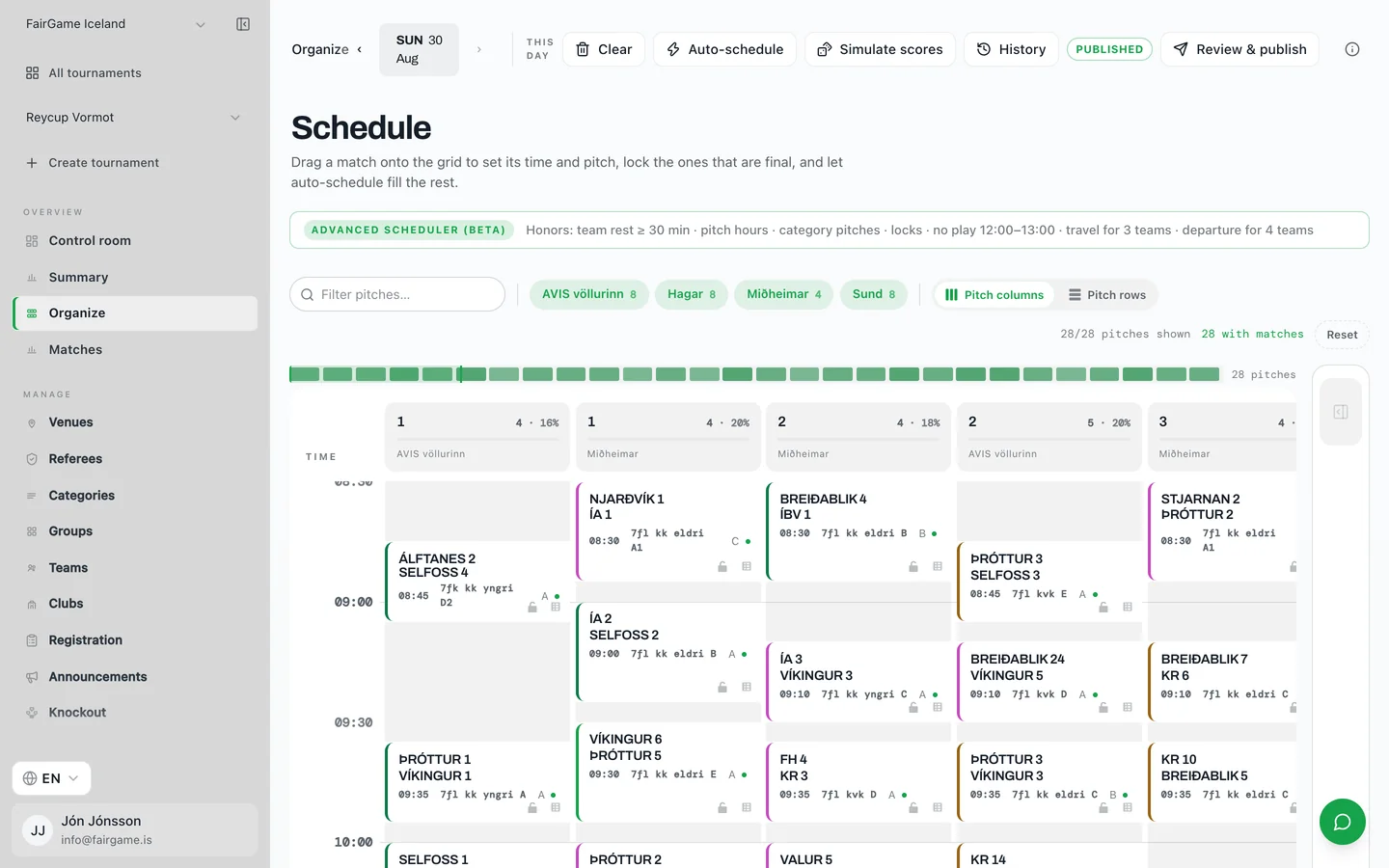
Generating the pairings is the easy part. The hard part is fitting them onto real pitches and time slots without a team playing twice at once, refereeing its own match, or facing back-to-back games with no rest.
- Pitch clashes: two matches assigned to the same pitch at the same time.
- Double-booked teams: a team scheduled on two pitches in the same slot.
- No rest: a team finishing on one pitch and expected on another minutes later.
- Referee conflicts: a team asked to officiate while it is also playing.
Let the computer solve it
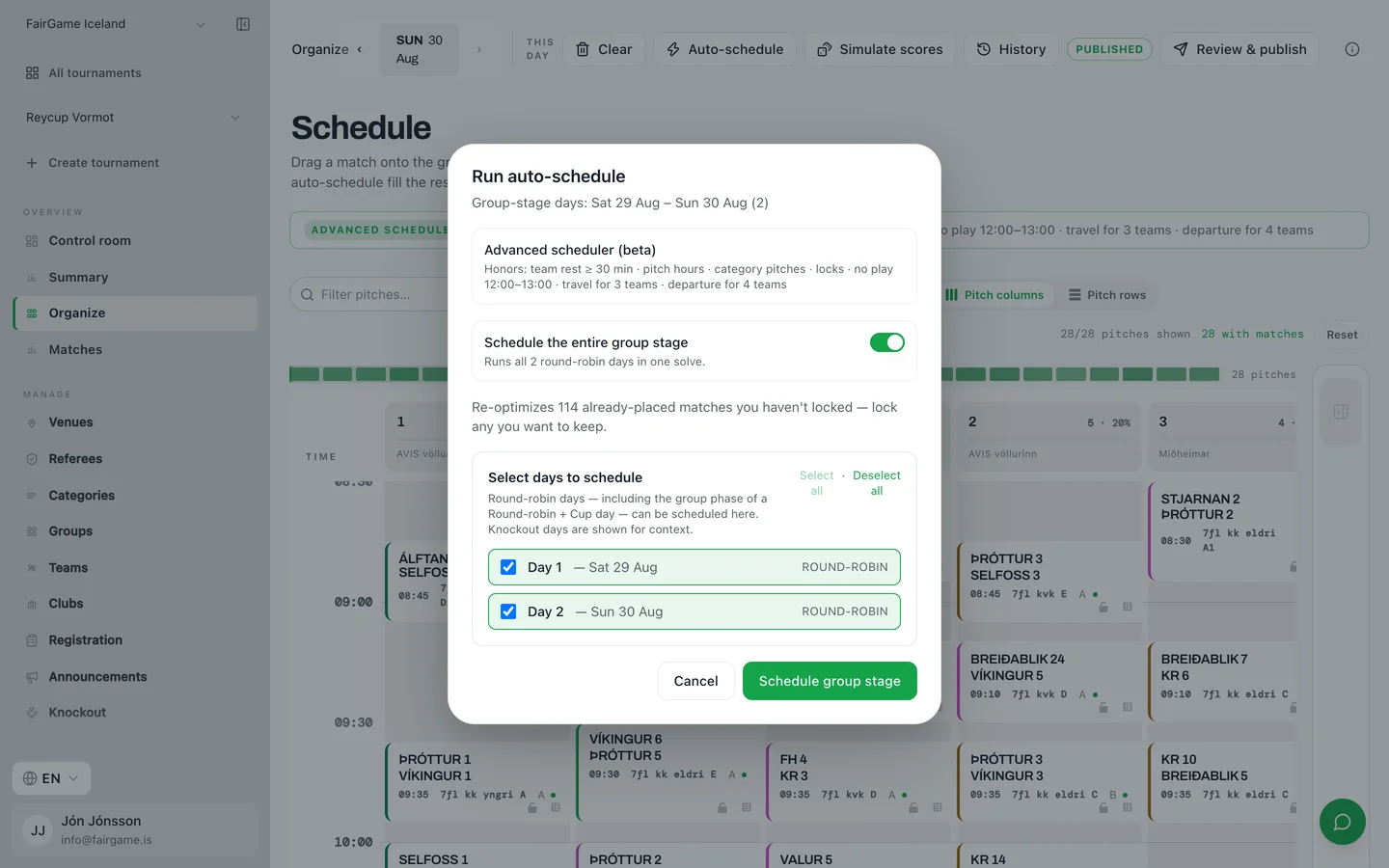
Every one of those rules is a constraint, and constraints are exactly what scheduling software is built to satisfy. FairGame takes your teams, pitches and available hours and returns a complete round-robin schedule in seconds — no clashes, balanced rest, and referees who are never double-booked. When a team drops out or a pitch goes offline, it reschedules the affected matches instead of making you start over.