Tournament Bracket Generator: How Seeding Works
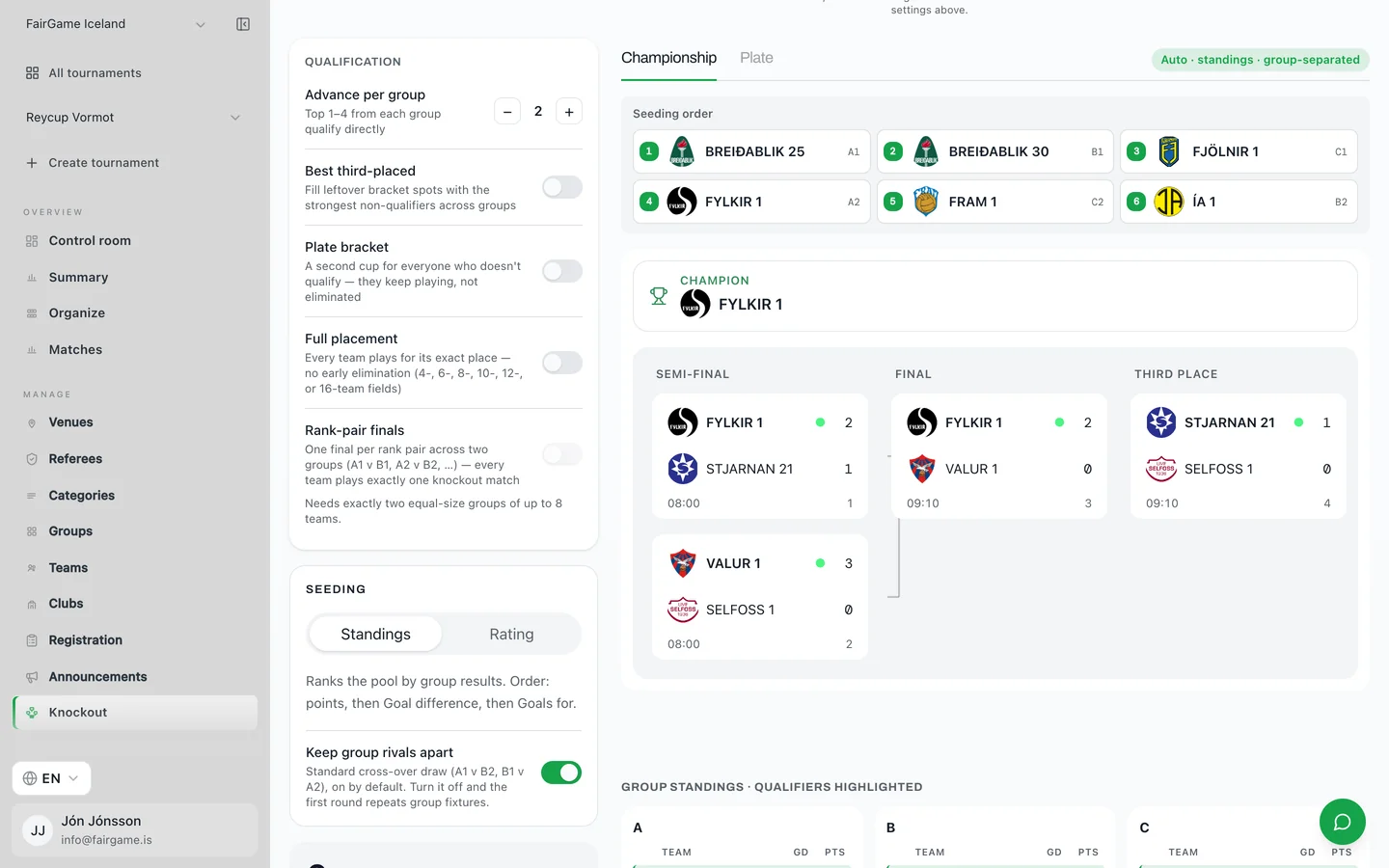
A tournament bracket generator seeds teams by ranking them first, then placing them so the strongest cannot meet until the latest possible round — the top seed plays the bottom seed, the second seed plays the second-bottom, and so on down the list.
Getting that placement right is what separates a bracket that feels fair from one that produces a great final by luck.
The standard seeding pattern
In a seeded bracket, the pairing rule for the first round is simple: seed 1 plays the lowest seed, seed 2 plays the second lowest, and so on. In a 16-team bracket that gives 1 v 16, 2 v 15, 3 v 14, 4 v 13, and so on.
The important part is not just the pairings but which half of the bracket each team lands in. Seeds 1 and 2 must be placed in opposite halves so they can only meet in the final. Seeds 3 and 4 go into the opposite quarters from each other, so the four strongest teams are spread across the four quarters of the draw.
- Seed 1 and seed 2: opposite halves — can only meet in the final
- Seeds 1–4: one per quarter — earliest possible meeting is a semi-final
- Seeds 1–8: one per eighth — earliest possible meeting is a quarter-final
Done properly, this means an upset is always possible but never manufactured by the draw. If the top two teams meet in round one, that is a seeding failure, not bad luck.
Where byes go
When the field is not a power of two, some teams advance without playing. Byes always go to the highest seeds — that is the reward for finishing top of a group.
With 12 teams, seeds 1 to 4 receive byes and seeds 5 to 12 play a first round. The four bye teams join the four winners for a clean eight-team quarter-final. Giving byes to lower seeds instead would hand an advantage to teams that did not earn it.
Where the seeds come from
A generator has to rank the teams before it can place them, and there are two honest sources for that ranking.
The first is group standings. If the tournament ran a group stage, the tables already say who performed: group winners seed above runners-up, and ties are broken by points, then goal difference, then goals scored. This is the most common and most defensible method, because the ranking was earned on the pitch that day.
The second is skill rating, which is more useful when the bracket starts cold with no group stage — a one-day cup, for example. A rating system like OpenSkill learns each team's strength from previous results, including margins, so a team that won narrowly is rated differently from one that won heavily.
Best third-placed teams
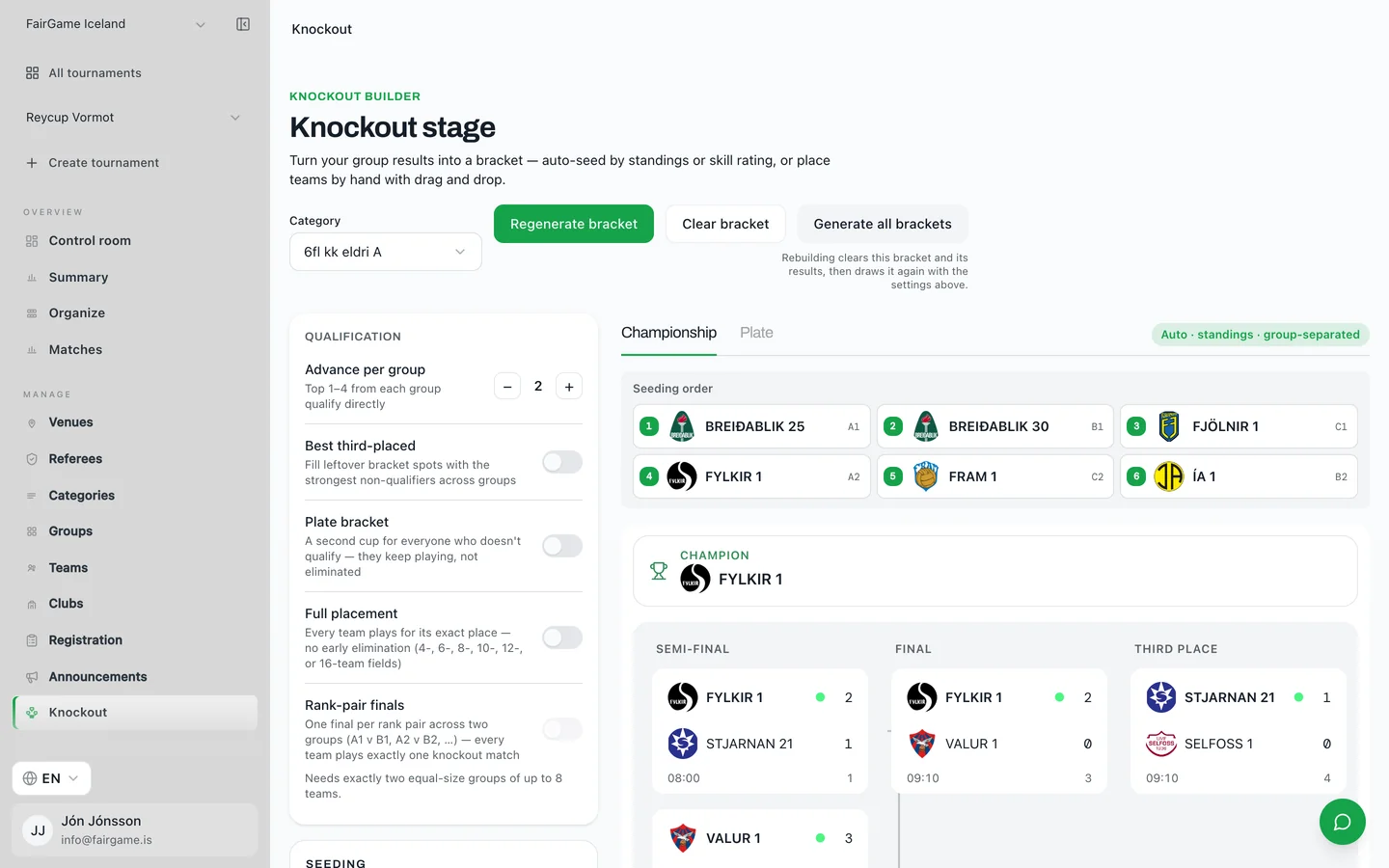
A common problem: six groups produce six winners and six runners-up, which is twelve qualifiers, but your bracket has sixteen slots. You need four more teams.
The usual answer is to take the best third-placed teams across all groups. Ranking teams that never played each other requires a consistent rule — points first, then goal difference, then goals scored — and, where group sizes differ, comparing per-match averages rather than totals so a team from a larger group is not flattered by having played more.
Keeping clubs apart
One rule that pure seeding will not give you: teams from the same club should usually not meet in the first round, especially in youth tournaments where two sides of the same club have travelled together.
If your bracket generator does not handle this, you end up adjusting the draw by hand — and every manual nudge risks breaking the seeding logic you just applied. Check whether the tool lets you express the constraint rather than fix the symptom.
Generating the bracket in FairGame
FairGame seeds the bracket straight from your live group standings, so qualifiers flow through the moment the last group match is scored. You can switch the seeding source to skill rating when there is no group stage to draw on, or drag teams into position by hand when you want the final say.
Brackets run from a final up to a round of 32, byes are placed automatically, and a plate bracket or full placement playoffs keep the non-qualifiers playing instead of going home. Change a group result and the bracket regenerates rather than needing a redraw.
Frequently asked questions
How does seeding work in a tournament bracket?
Teams are ranked, then placed so the strongest are as far apart as possible. The top seed faces the lowest seed, the second seed faces the second lowest, and seeds 1 and 2 are put in opposite halves so they can only meet in the final.
Who gets a bye in a bracket?
The highest seeds. When the field is not a power of two, byes trim it to a clean 8, 16 or 32, and giving them to the top-ranked teams rewards group-stage performance rather than handing an advantage to weaker teams.
Should I seed by group standings or by rating?
Use group standings when a group stage has been played — the ranking was earned that day and is easy to defend. Use a skill rating when the bracket starts cold with no group stage, since it draws on previous results to estimate strength rather than guessing.
How do you pick the best third-placed teams?
Rank all third-placed teams against each other with a consistent rule: points, then goal difference, then goals scored. If groups are different sizes, compare per-match averages instead of totals so teams from larger groups are not favoured.
Can a bracket generator keep teams from the same club apart?
Good ones can. It matters most in youth tournaments where clubs enter several teams. If the tool cannot express the rule, you have to adjust the draw manually, which risks undoing the seeding you just applied.