Round Robin vs Swiss vs Knockout: Formats Compared

· 7 min read

Jón Levy
FairGame

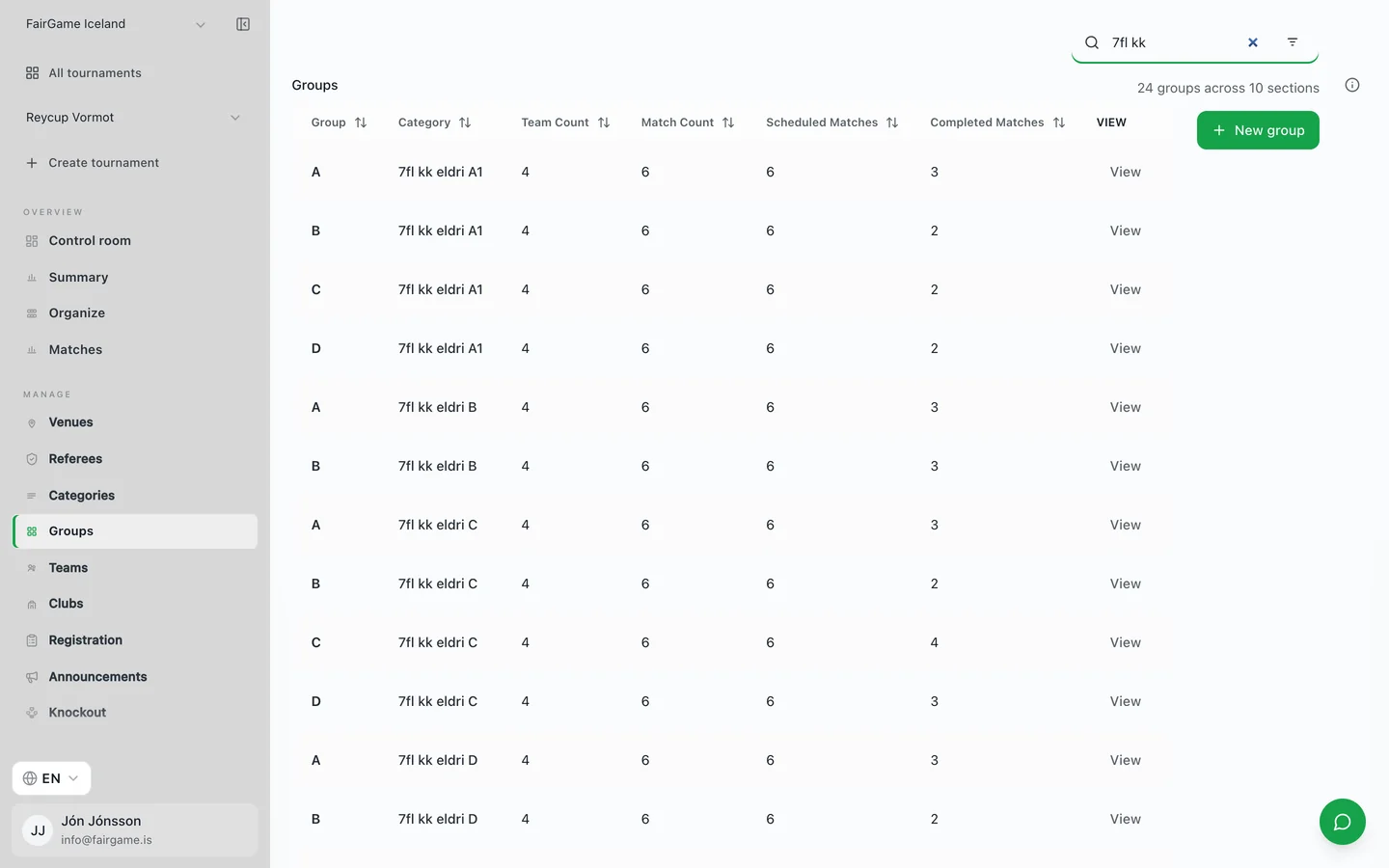
Tournament groups with teams drawn into balanced round-robin groups ahead of the knockout stage

Choose a round-robin when the field is small and fairness matters most, a knockout when the field is large and time is short, and a Swiss system when you have a large field but still want every team to play the same number of matches.

Here is how the three compare on the things that actually decide it: matches per team, total time, and how much administration they cost you on the day.
Tournament Bracket Generator: How Seeding Works

· 6 min read
Jón Levy
FairGame

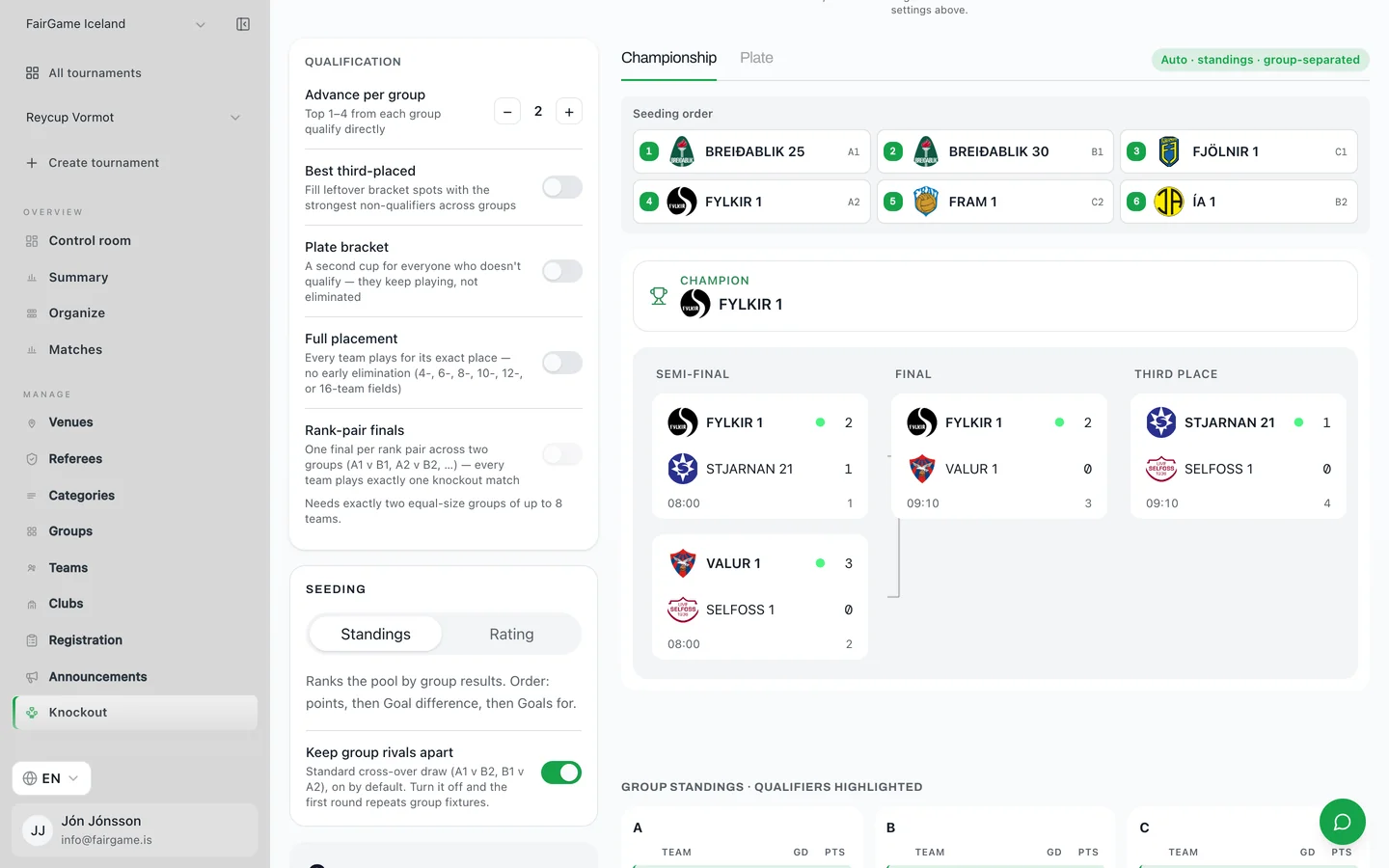
A knockout builder turning group results into a seeded bracket, with top finishers per group qualifying and seeded by their standings

A tournament bracket generator seeds teams by ranking them first, then placing them so the strongest cannot meet until the latest possible round — the top seed plays the bottom seed, the second seed plays the second-bottom, and so on down the list.

Getting that placement right is what separates a bracket that feels fair from one that produces a great final by luck.

What Are Knockout Rounds? Rules, Byes and Seeding

· 6 min read
Jón Levy
FairGame

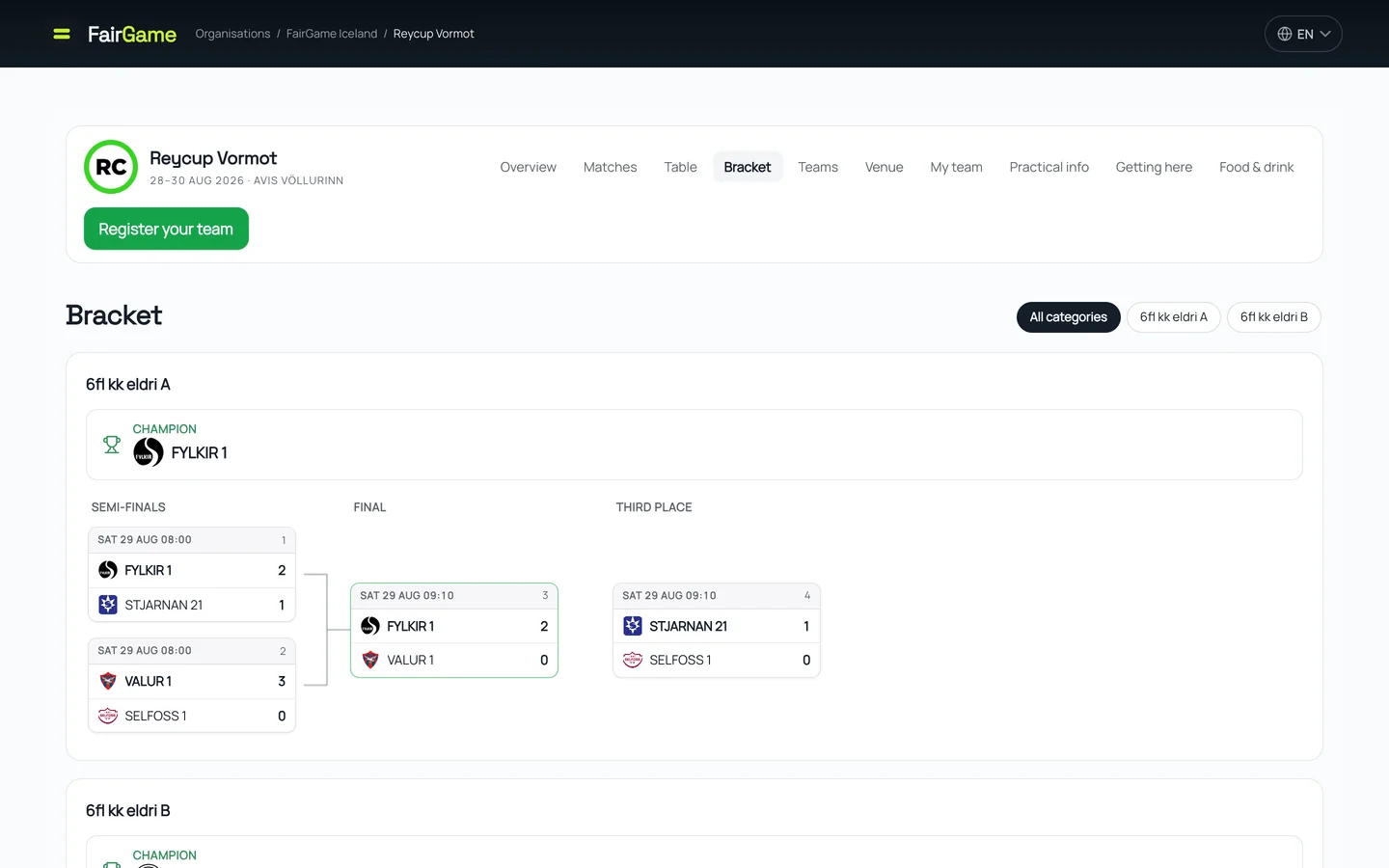
A public knockout bracket showing the semi-finals, final and third-place match with real teams advancing round by round

Knockout rounds are the stages of a tournament where the loser of each match is eliminated and the winner moves on. Each round halves the field, so 16 teams become 8, then 4, then 2, then a single champion.

They are also called elimination rounds or the bracket, and they are what most people picture when they think of a tournament finish.

What's New: Summer 2026 Release

· 7 min read
Jón Levy
FairGame

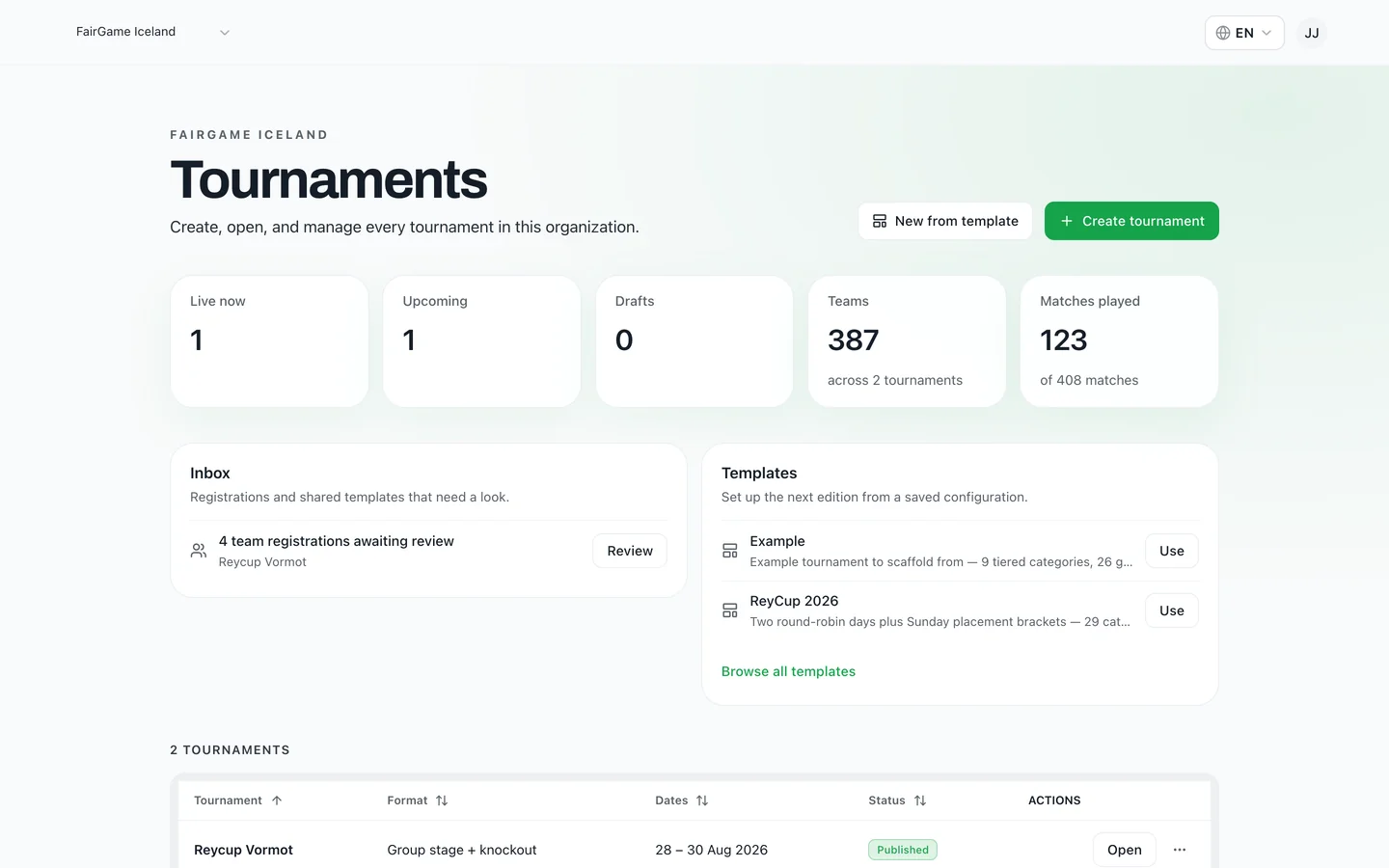
The FairGame tournament dashboard showing live, upcoming and draft counts, total teams and matches played, an inbox for registrations, and a templates card for scaffolding the next edition

We spend most of our time with organizers during the parts of a tournament that hurt: the week before, when the schedule still doesn't fit, and the morning of, when a referee doesn't show. Almost everything that shipped this summer came out of watching those two moments.

Here is what is new — what each feature does, and the specific problem it removes.

Referee Management for Multi-Pitch Tournaments

· 3 min read
Jón Levy
FairGame

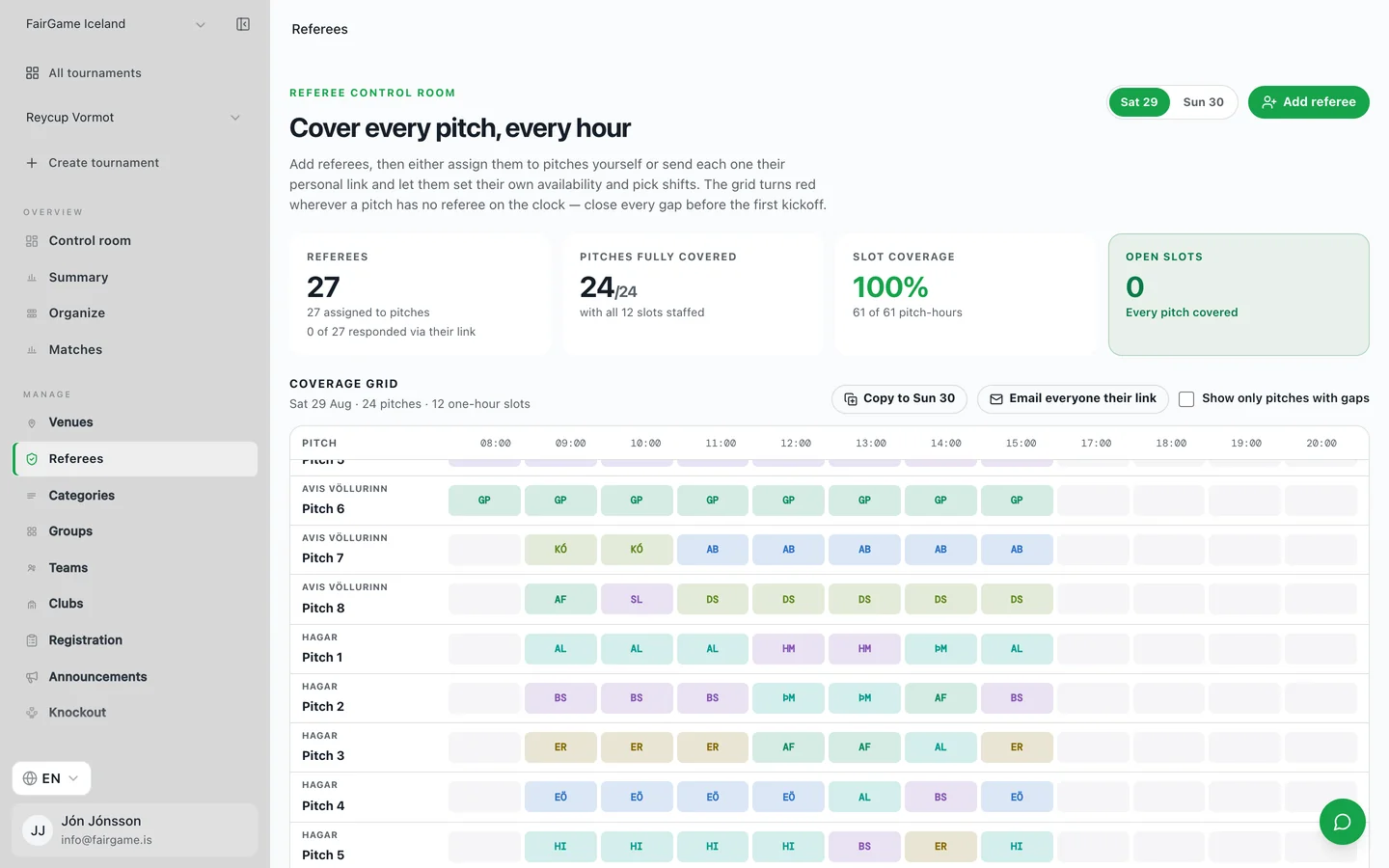
FairGame's referee coverage grid with an official assigned to every pitch and every hour of the day, showing full coverage and zero open slots

On a busy tournament day a missing referee stops a match as surely as a missing team. With games kicking off every few minutes across a dozen pitches, keeping an official on every one is its own logistics problem.

Here is how to staff referees without gaps, avoid the conflicts that erode trust, and get scores off the pitch and onto the results page in seconds.

How to Run a Youth Football Tournament

· 3 min read
Jón Levy
FairGame

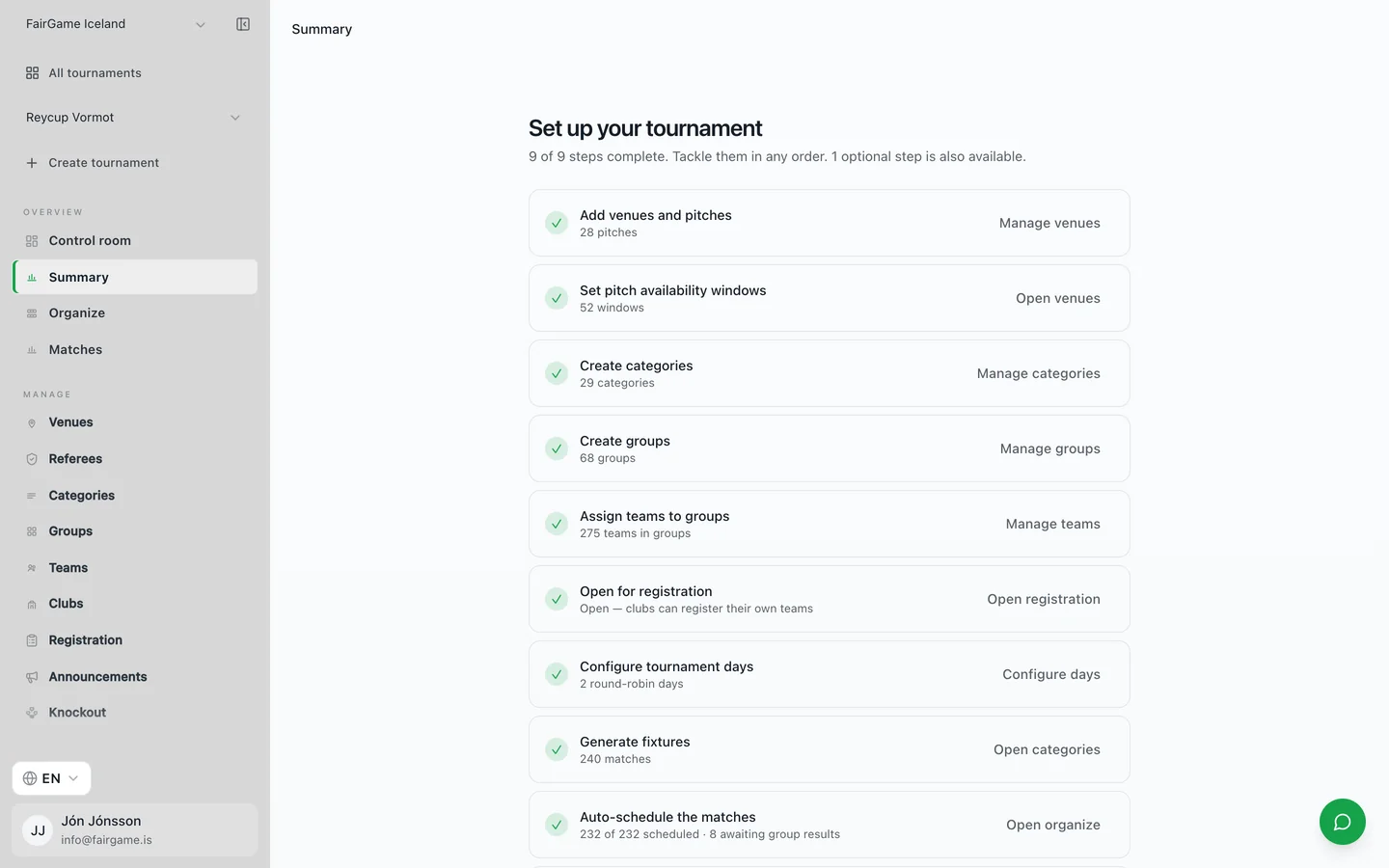
FairGame's tournament setup checklist walking an organizer through venues, categories, groups, teams, fixtures and scheduling step by step

Running a youth football tournament is equal parts logistics and hospitality: dozens of teams, anxious coaches, and hundreds of parents who all want to know where their child plays next and who is winning.

This is the checklist we walk new organizers through — the decisions to make early, and the ones you can safely leave to software.

Round-Robin vs Knockout: Which Format to Pick

· 3 min read
Jón Levy
FairGame

A FairGame public knockout bracket showing the semi-finals, final and third-place match, with real teams advancing round by round

The format you pick decides how fair your tournament feels, how long it runs, and how many matches each team gets for their entry fee. Choose wrong and you either run out of daylight or send half the teams home after one game.

Here is how the main formats compare, and a simple way to choose between them.

How to Schedule a Round-Robin Tournament

· 3 min read
Jón Levy
FairGame

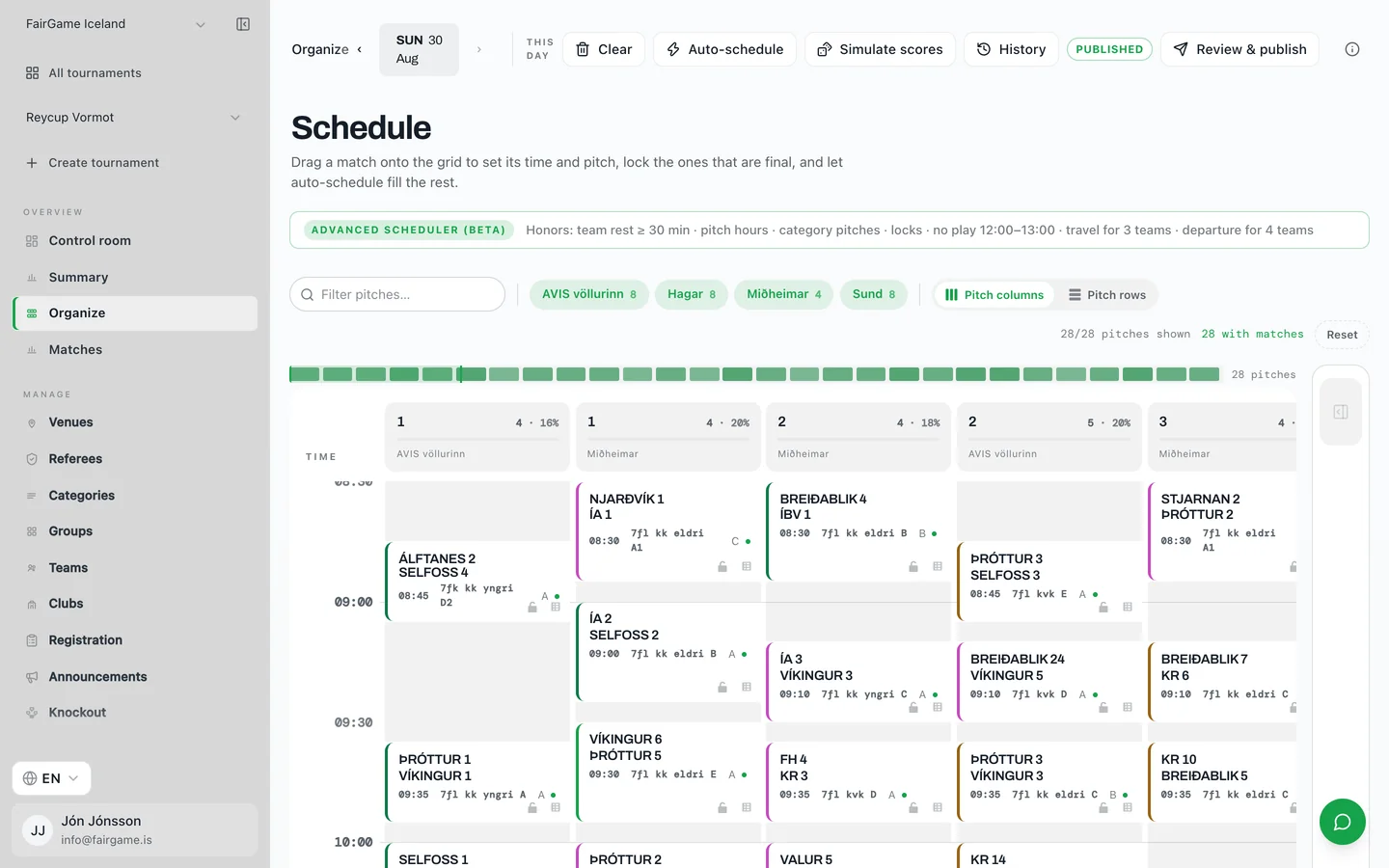
FairGame's scheduling grid with an auto-generated round-robin fixture list placed conflict-free across every pitch and time slot

A round-robin is the fairest way to run a group stage: every team plays every other team once, so the final standings reflect real form rather than a lucky draw. It is also the format most likely to break a spreadsheet.

This guide walks through how round-robin scheduling actually works, how to handle an odd number of teams, and how to avoid the conflicts that force organizers to rebuild the schedule the night before kickoff.