Hoppa till huvudinnehåll

217 lag på en helg, och ingen som knackade på dörren till kontrollrummet

· 7 min att läsa

Jón Levy
FairGame
”Det här systemet är helt sjukt!!”
Óliordförande för Fylkirs barn- och ungdomsråd

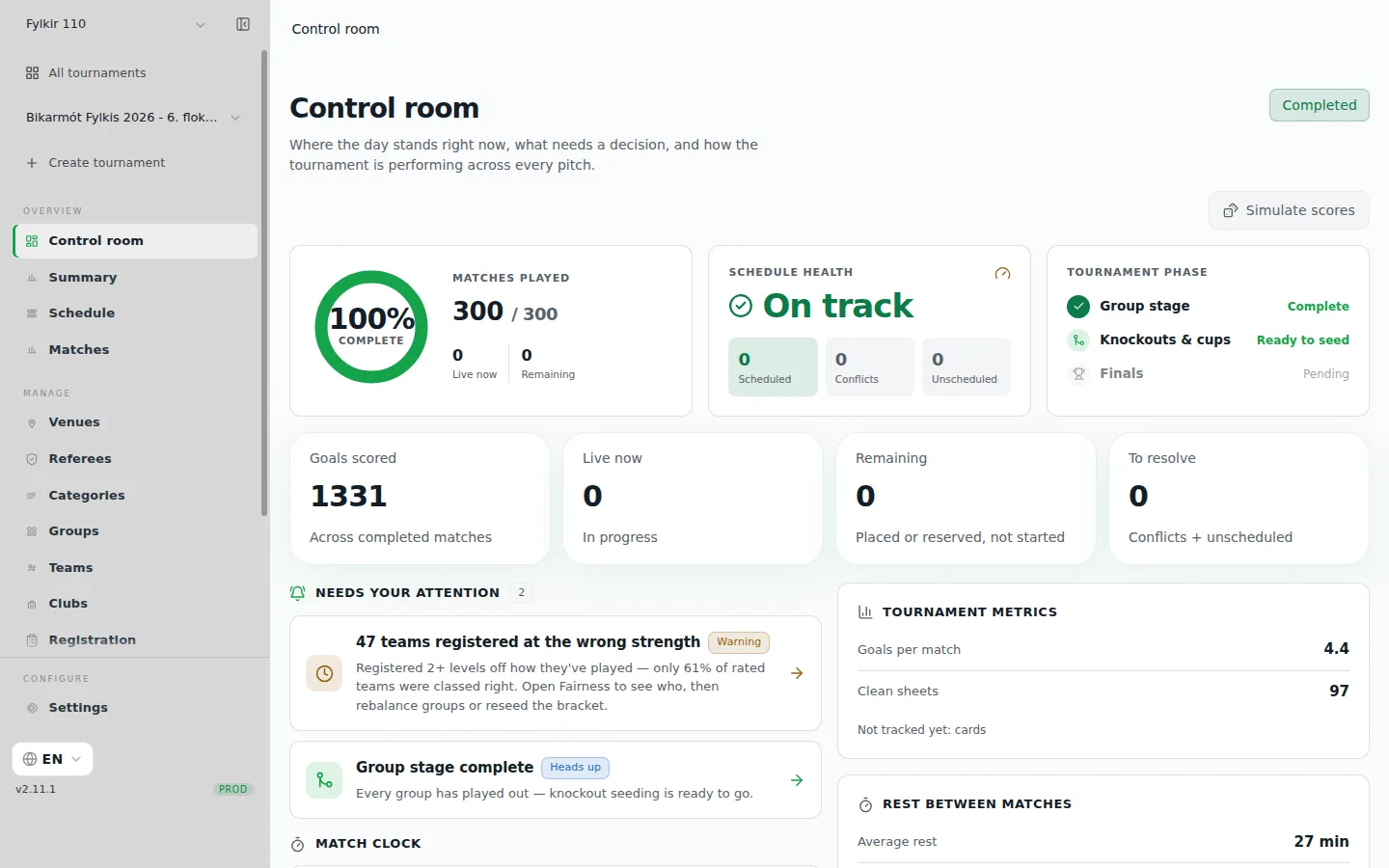
FairGames Kontrollrum för Bikarmót Fylkis, 6. flokkur, vid dagens slut: 300 av 300 matcher spelade, ingen pågående och ingen kvar, 1 331 mål, spelschemat i fas och en varning om att 47 lag var registrerade på fel styrkenivå

Tre turneringar spelades i FairGame den här helgen, och tillsammans ställde de 217 lag på planen. Fylkirs Bikarmót för 6. flokkur och Fjölnirs árgangamót (en turnering där tidigare spelare bildar lag efter födelseår) spelades båda på lördagen, och Fylkirs Bikarmót för 7. flokkur spelas på söndagen.

Varje turnering har sitt eget format: grupper där alla möter alla hos Fylkir på lördagen, gruppspel följt av slutspel hos Fjölnir och schweizerformat för Fylkirs yngsta spelare på söndagen. Alla tre körs från samma administrationsapp, och föräldrar och tränare följer med i FairGame-appen i mobilen. Så här såg helgen ut från arrangörernas sida av bordet.
Nyheter: slutet av september 2026

· 9 min att läsa
Jón Levy
FairGame

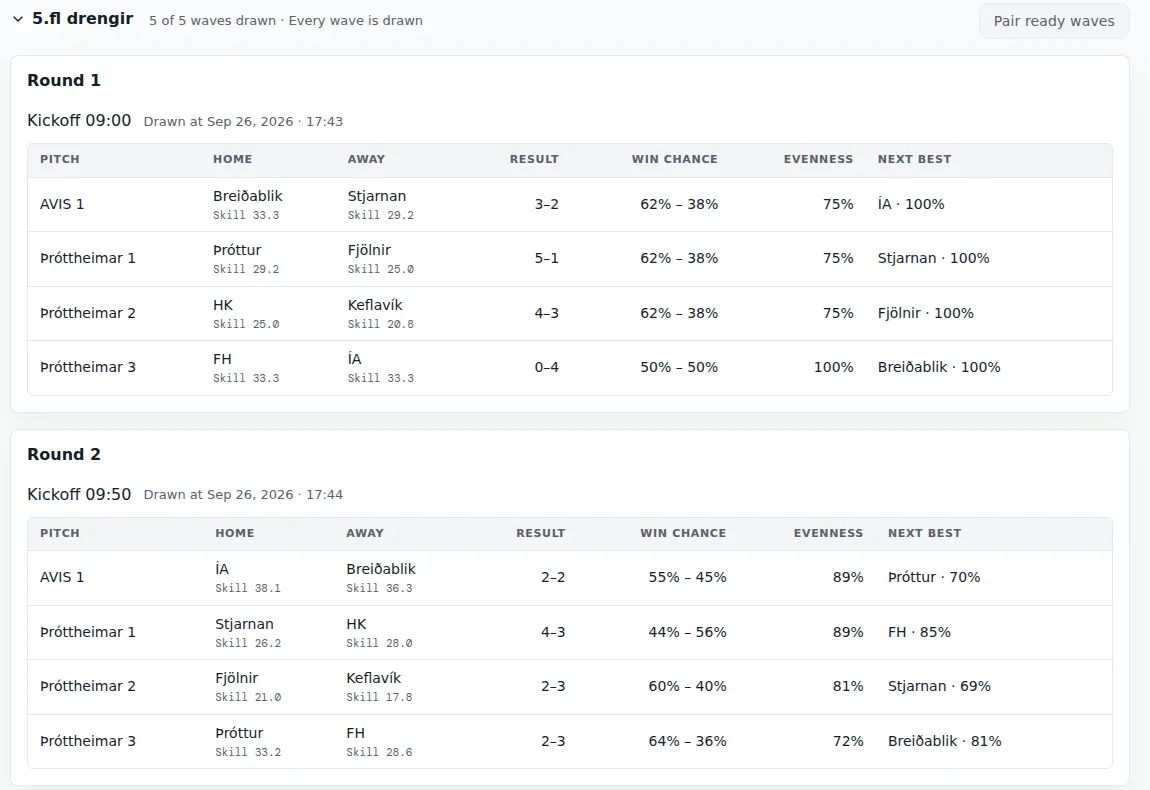
Sidan Adaptiva omgångar för en schweizisk pool: omgång 1 ihopparad utifrån registrerad styrka, omgång 2 ihopparad utifrån färdighetsbetyg som räknats om efter omgång 1, varje match listad per plan med båda lagens färdighet, vinstchansen, hur jämn matchen är och den bästa motståndare hemmalaget inte fick

Vårt senaste inlägg publicerades för nio dagar sedan, den 17 september, och det avslutades med att den ombyggda iOS-appen ännu inte gick att installera. Nu gör den det, på iPhone och iPad, och den nya Android-appen släpptes samma dag.

Resten av inlägget handlar om ett turneringsformat som FairGame inte hade tidigare, den schweiziska poolen, som du kan lotta i förväg eller omgång för omgång allteftersom resultaten kommer in; en matchklocka som hela hallen spelar efter; och en inställning som hindrar att ett 12–0 publiceras som 12–0. En stor del av arbetet däremellan syns inte (mest releaseverktyg för apparna, felrapportering och att få administrationsappen att klara 512 lag), och det har vi lämnat utanför.

Nyheter: mitten av september 2026

· 7 min att läsa
Jón Levy
FairGame

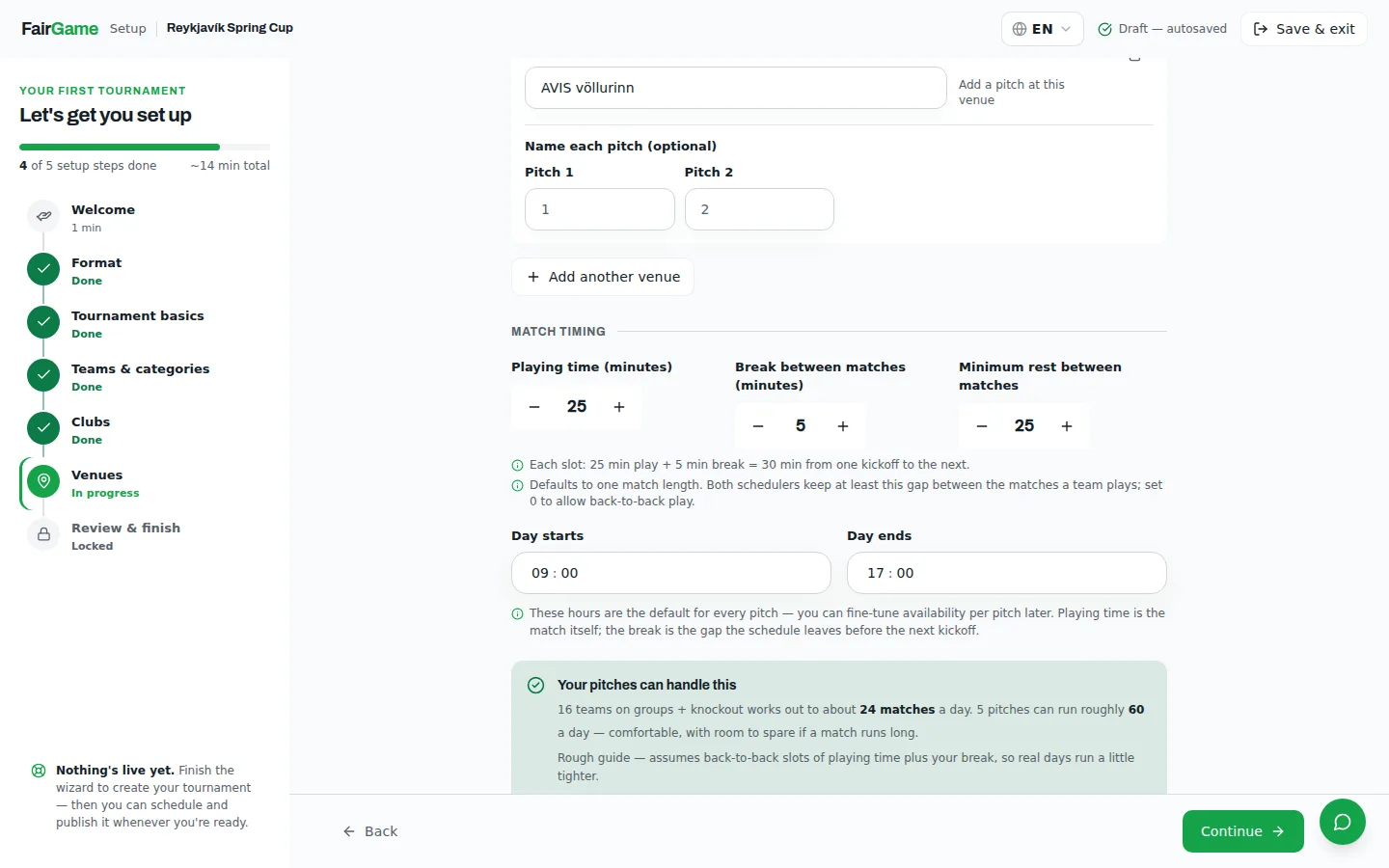
Guidens arenasteg med tre separata fält — speltid 25 minuter, paus mellan matcher 5 minuter, minsta vila mellan matcher 25 minuter — ovanför en grön ruta med texten "Era planer klarar detta: 16 lag i grupper + slutspel blir ungefär 24 matcher per dag, 5 planer kan köra omkring 60"

Vårt senaste inlägg publicerades för två veckor sedan, den 4 september. Det mesta som släppts sedan dess gick till två saker som du inte kan se: en inbyggd iOS-app som vi bygger om från grunden och ännu inte har gett någon tillgång till, samt ett omfattande arbete med felrapporteringen så att vi får höra om fel innan du behöver berätta om dem för oss.

Det som ändrades för arrangörer kom huvudsakligen från ett håll. En klubb genomförde en riktig turnering i FairGame, skrev ner allt som stod i vägen och skickade listan till oss. Att arbeta igenom den visade sig vara de mest användbara två veckorna vi haft på länge, eftersom inget av detta var något vi själva hade hittat på.

What's New: Early September 2026

· 8 min att läsa
Jón Levy
FairGame

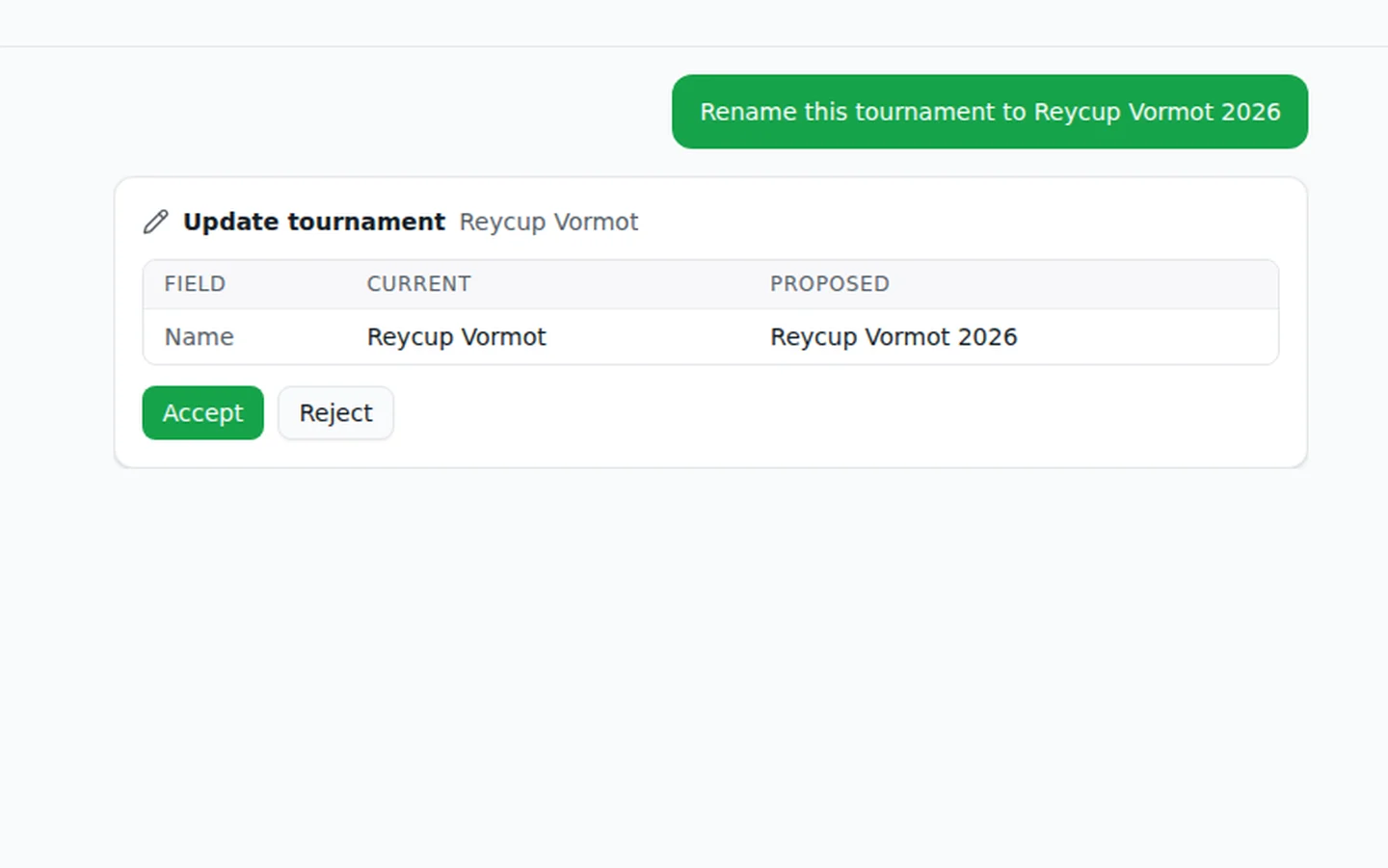
A chat message asking FairGame to rename a tournament, followed by an approval card that lists the tournament's current and proposed name with Accept and Reject buttons

Our last post here was three weeks ago, on August 13th. Three weeks is not long, but FairGame looks different now: the tournament assistant we had been building quietly is ready to use, and a handful of other changes shipped alongside it.

Most of what changed under the hood is fixes and polish you would never notice. This post is about the parts that change what you can actually do: an assistant that acts on your tournament when you ask it to, a knockout bracket rebuilt from scratch, referees who cover for each other without you assigning a single shift, and a registration model that finally separates who signs up from who pays.

Free Round-Robin and Knockout Generator

· 5 min att läsa
Jón Levy
FairGame

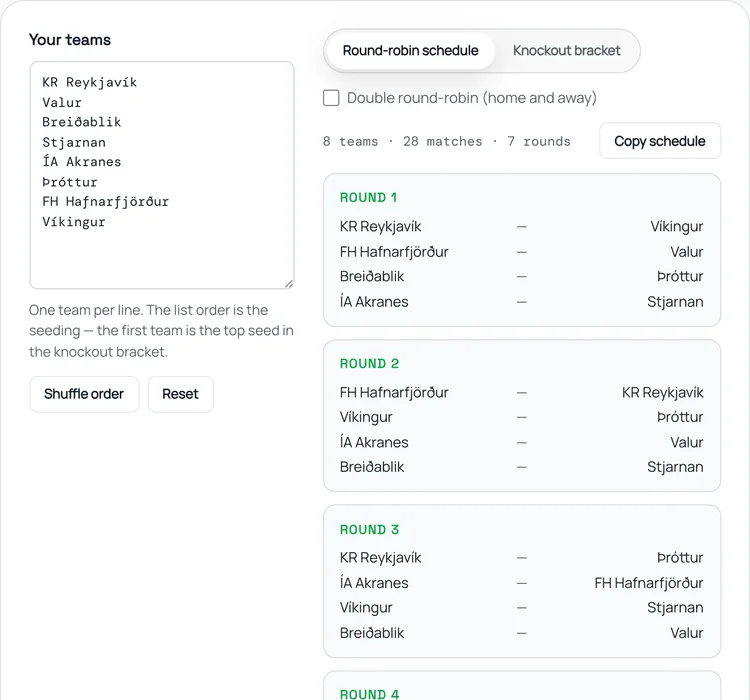
The interactive tournament generator with eight Icelandic clubs entered — the team list and seeding on the left, the generated round-robin schedule updating live on the right, with the knockout bracket one toggle away

Type in your teams and get a complete fixture list on the spot: a round-robin schedule where every team plays every other team, or a seeded knockout bracket ready for a finals day. It runs right here in the page — free, no signup, nothing to install.

Below the generator you will find a short explanation of how the fixtures are built, so you can defend the draw when a coach questions it.

How to Create a Round Robin Schedule in Excel

· 8 min att läsa
Jón Levy
FairGame

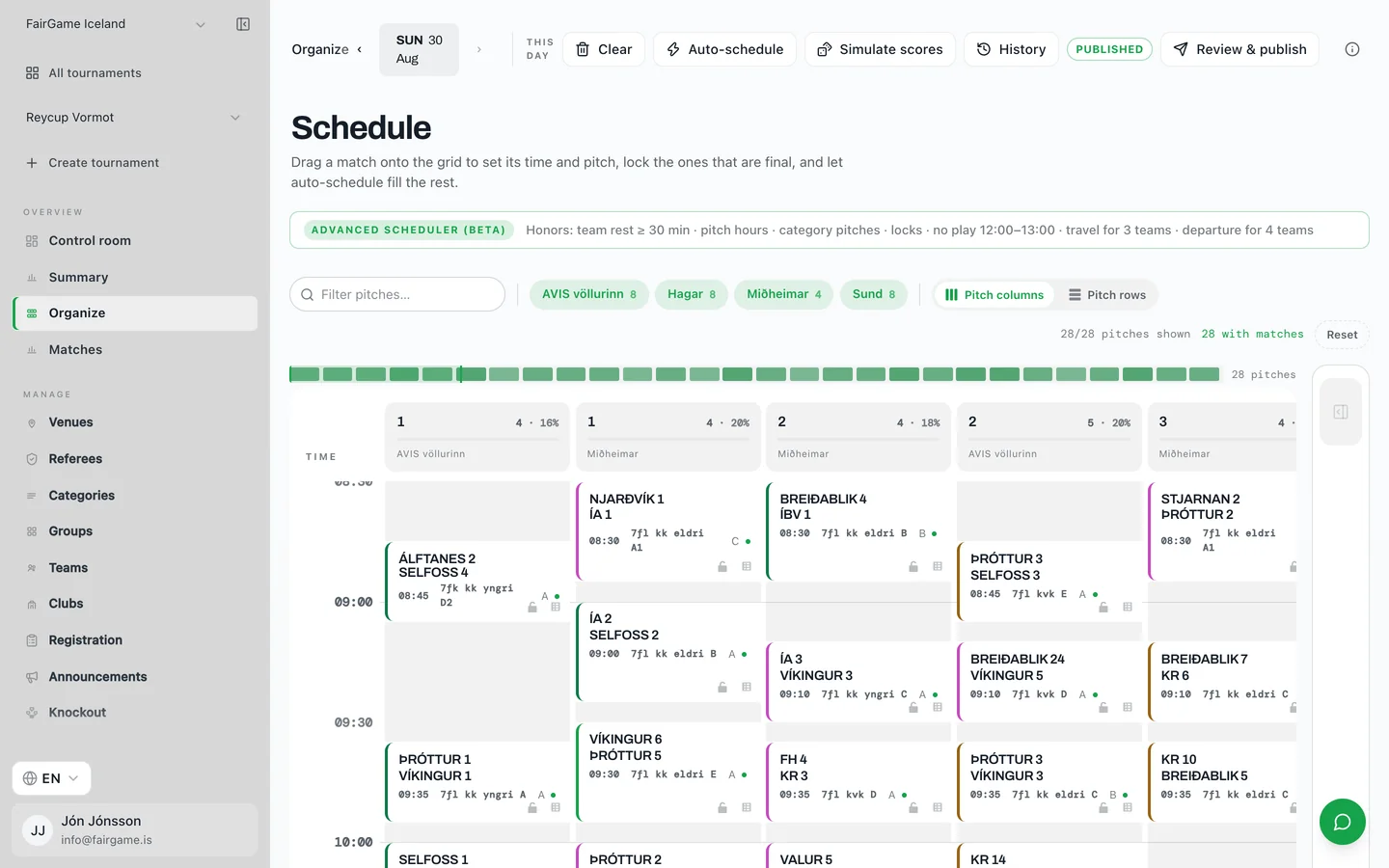
A round-robin fixture list laid out across every pitch and time slot, the finished result a spreadsheet is usually used to plan

To build a round-robin schedule in Excel, list your teams in one column, keep the first team fixed, and rotate the rest one position each round — this is the circle method, and it guarantees every team plays every other exactly once in n − 1 rounds.

Below is the manual layout, the formula that does the rotating for you, and the point at which a spreadsheet stops being the right tool.

How to Schedule a Multi-Venue Tournament

· 6 min att läsa
Jón Levy
FairGame

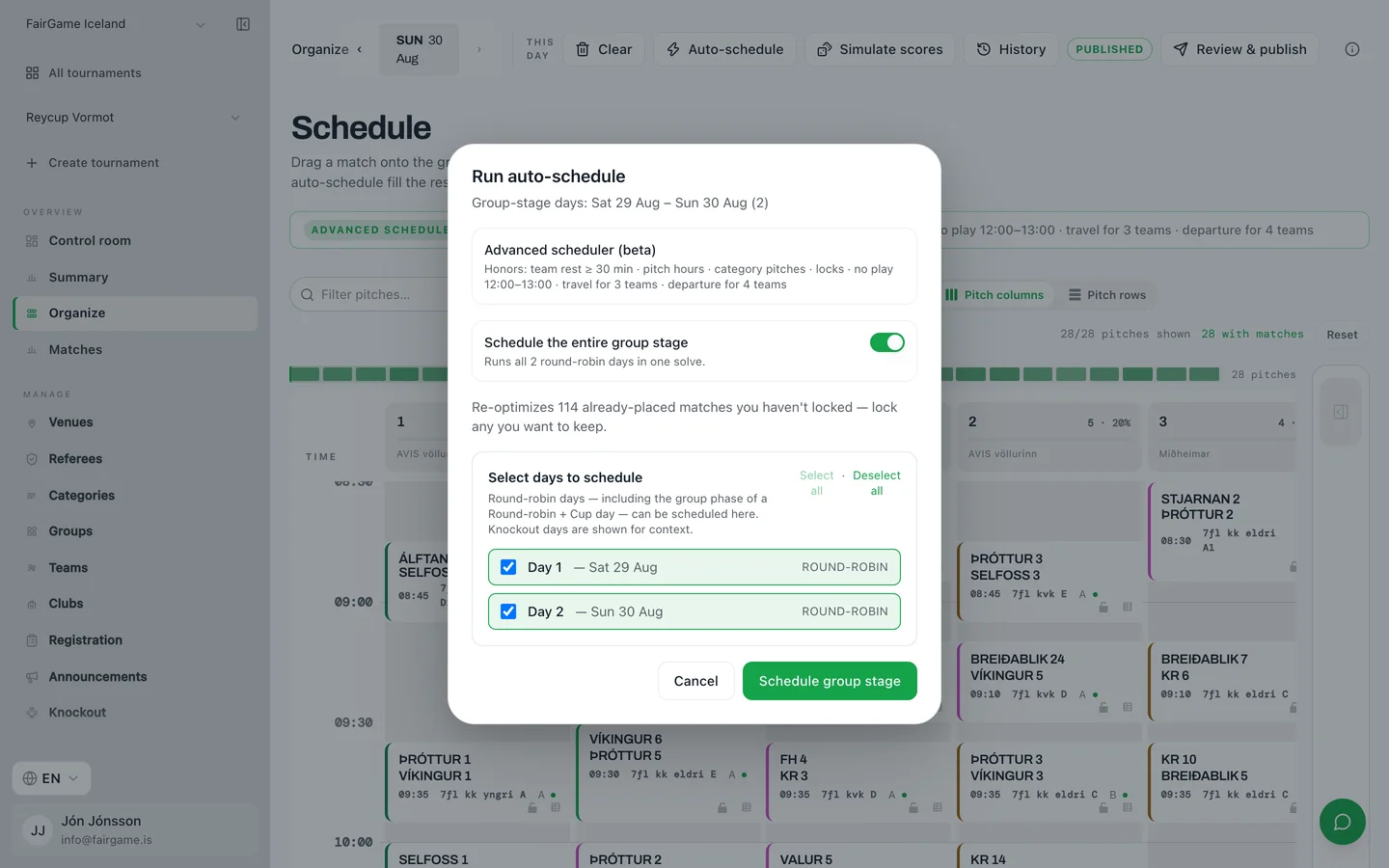
An auto-schedule dialog running the solver to place every group-stage match across both tournament days in a single solve

To schedule a tournament across multiple venues, first check the day fits at all — total pitch-minutes available against match-minutes required — then place fixtures so no team is ever booked in two places at once, and never expects a team to cross town between back-to-back matches.

The hard part is not the fixture list. It is the travel, the rest, and the fact that every constraint interacts with every other one.

Round-Robin vs Swiss vs Knockout: Which to Pick

· 7 min att läsa
Jón Levy
FairGame

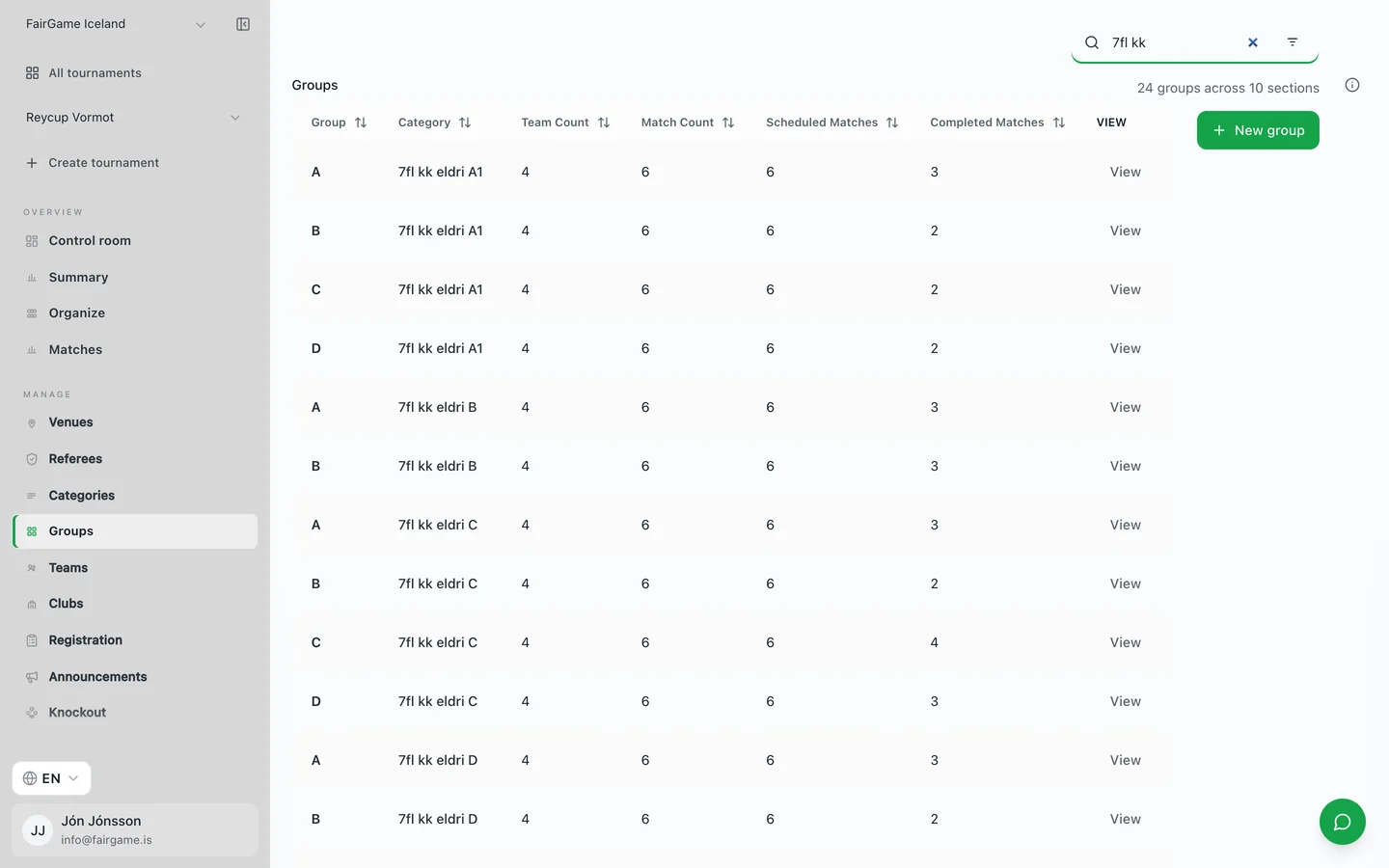
Tournament groups with teams drawn into balanced round-robin groups ahead of the knockout stage

Choose a round-robin when the field is small and fairness matters most, a knockout when the field is large and time is short, and a Swiss system when you have a large field but still want every team to play the same number of matches.

Here is how the three compare on the things that actually decide it: matches per team, total time, and how much administration they cost you on the day.

Tournament Bracket Generator: How Seeding Works

· 6 min att läsa
Jón Levy
FairGame

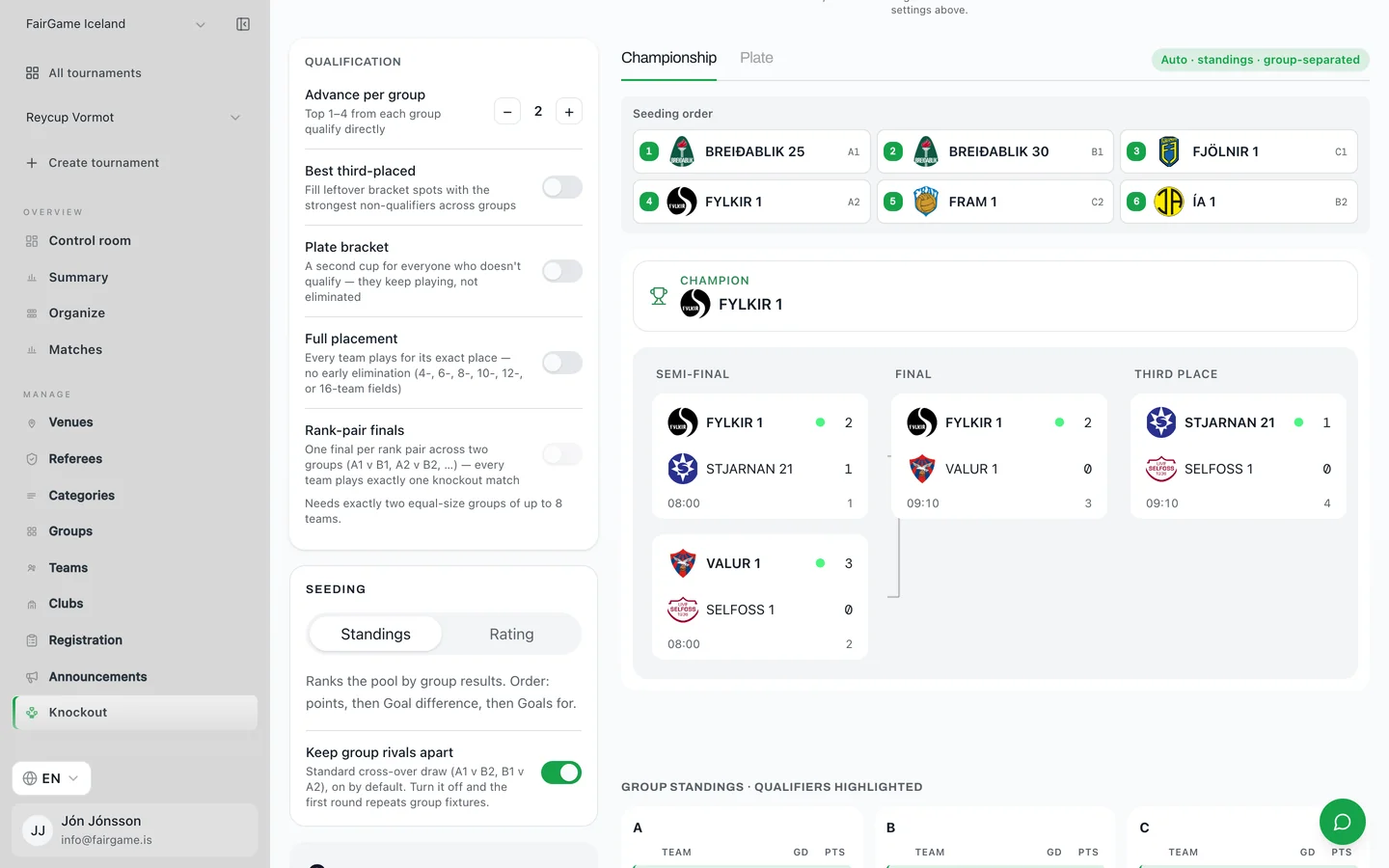
A knockout builder turning group results into a seeded bracket, with top finishers per group qualifying and seeded by their standings

A tournament bracket generator seeds teams by ranking them first, then placing them so the strongest cannot meet until the latest possible round — the top seed plays the bottom seed, the second seed plays the second-bottom, and so on down the list.

Getting that placement right is what separates a bracket that feels fair from one that produces a great final by luck.

What Are Knockout Rounds?

· 6 min att läsa
Jón Levy
FairGame

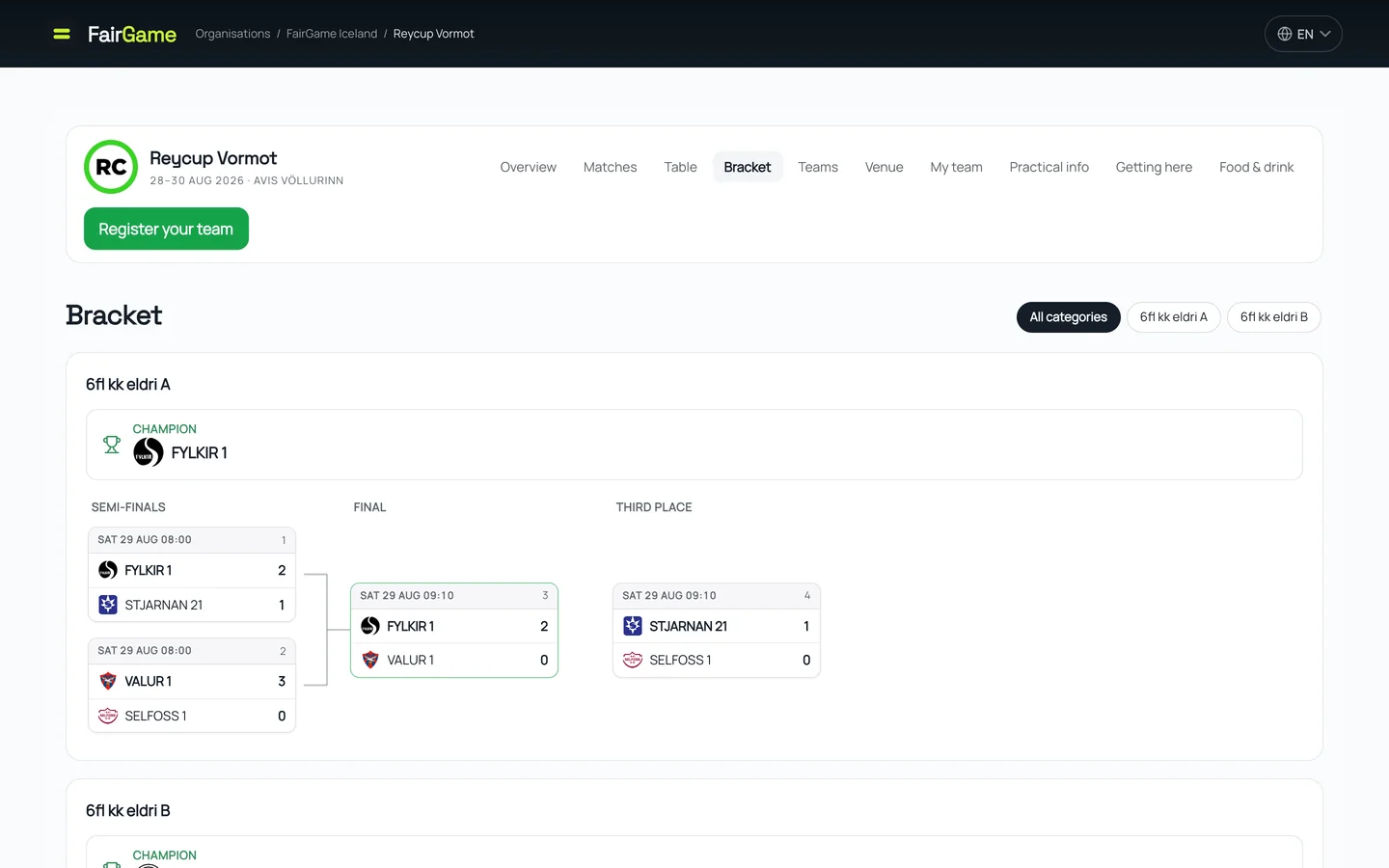
A public knockout bracket showing the semi-finals, final and third-place match with real teams advancing round by round

Knockout rounds are the stages of a tournament where the loser of each match is eliminated and the winner moves on. Each round halves the field, so 16 teams become 8, then 4, then 2, then a single champion.

They are also called elimination rounds or the bracket, and they are what most people picture when they think of a tournament finish.